| OCR Text |
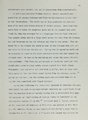
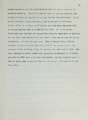
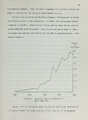
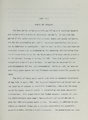
Show 143 After I passed my prelims in theoretical physics in l933, I started to do my thesis work with Eyring. It was a tremendously stimulating experience. Eyring was young, vigorous and even athletic. He prided himself on being able to beat his graduate students at the lOO-year dash. Eyring thought about his work from five or six o'clock in the morning, when he did his setting up exercises, until he went to sleep around midnight. He studied all of the theoretical physics literature and new techniqes. He tried to apply everything he learned to the behavior of nature. Missing links in his arguments were temporarily filled by conjectures. Thus, he was prepared to attack any problem. In this sense he was the compleat scientist. Each morning he would come to work bubbling over with new ideas. Most of his ideas were wrong, and it was the responsibility of his graduate students to find the logical errors or the reasons why the ideas were not workable. However, there remained 5 to l0 % of the ideas which were inherently interesting and provided a useful concept of the gross way in which the phenomena occurred. Thus each day we had a very practical demonstration of winnowing and sifting of ideas. The ability to recogngge which approaches were blind alleys was most important. That interest and resulting hard work on the problems of science continued with Eyring throughout his career. Many of his students recall the Saturday morning seminars and hOliday sessions. Sometimes they were held to make up classes missed because of his travel schedule but many times they were held because of Eyring's complete commitment to his work. It is interesting that though he was gone a hundred days a year, he missed almost none of his graduate classes. Eyring loves science and spends almost every waking moment thinking about it. Concurrent with his keen interest in science has been his deep concern for and encouragement of his students. One student recalls: "His demands on his students and those under him were large, but this encouragement brought out the best in them. He expected their full effort to be devoted to furthering the work; they responded and it was accomp- lished."37 Some interesting statistics illustrate this further. Of Eyring's nearly 600 scientific papers, he was the only author on about |