| OCR Text |
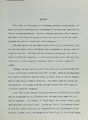
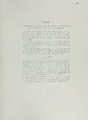
Show 119 postulated structures, water then fits well into the framework of the significant structure theory.78 The results of Eyring's more than thirty years study of liquids were published in a book form in l969 under the title, Significant Liquid Structures with Mu Shik Jhon as co-author and John Wiley and Sons as publisher. That it was not the last work on the subject is evident, for Eyring has continued to refine and perfect the theory since that time. Interestingly, Eyring's liquid theory has been quite controversial and the subject of some criticism.79 Perhaps this criticism is more a misunderstanding of what Eyring is trying to do, to build a workable useful model for liquids. Even so, he has a considerable following and his work is highly respected.80 More than once he has been recommedned to the Swedish Nobel Committee for the Nobel Prize for his work in absolute rate theory, liquid theory and optical rotary theory. Eyring's development of the one electron theory of optical rotation and circular dichroism rivals his work in liquid theory. The original paper with Condon and Alter exploded a long held belief that one electron in an asymmetric field would not contribute significantly to op- tical rotation. The new theory is the basis of what has been called the octant theory of optical activity.81 One of the goals of his studies, which have been extensive since l960, is to determine molecular structure of various compounds and to design drugs. With Dr. Daniel and Dr. Douglas Miles and others, he has determined the conformation of hundreds of nucleosides containing various substituents, synthesized by Professor Roland Robins for their possible importance in the chemotherapy of cancer. After determining molecular conformations by using spectroscopy, circular dichroism, and quantum mechanics, Eyring and co-workers use |