| OCR Text |
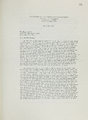
Show 56 mathematics many years before they were seen. Mendeleeff's periodic table of the elements predicted the existence of a number of then unknown and unsuspected elements which later were found to exist. Einstein's theory of relativity made a number of famous predictions which later were verified by scientific observation. One of the most famous of these scientific predictions which came true was the discovery of the existence of electromagnetic waves by Clerk Maxwell, British mathematician, some twenty years before they were actually found by Hertz, the German physicist. Work Only at Its Beginning Dr. Eyring has already applied his method to several branches of chemistry but the work is only beginning. He first applied the quantum principle to the study of the two types of hydrogen molecule, para and ortho hydrogen, discovered to exist about two years ago by Dr. Karl Bonhoffer, of the Kaiser Wilhelm Institute, Berlin, now of Frankfurtam-Main. These two hydrogen molecules differ in the direction of their motion, one going clockwise, the other counterclockwise. Dr. Eyring figured out the mechanism by which one of these types of hydrogen molecule might become converted into the other type. He calculated several alternative ways by which this could be achieved and settled on the easiest of these as the correct way. The easiest way, he determined, would be by first splitting the molecule into its component atoms. Two years later this was Verified in Germany by experiment. , Among the more recent developments in the method, to be published in the forthcoming issue of the Academy of Sciences, is the application of the quantum principles to the problem of separating the two isotopes of hydrogen, one of which has atomic weight of one and the other an atomic weight of two. The latter was discovered about a year ago by Professoi Harold C. Urey of Columbia University, and his associates. The publicity and praise did not interfere with Eyring's continuous productivity. Almost before the commotion died down, he, Taylor and their students began to work with chemical isotopes, particularly the recently discovered heavy water (deuterium oxide). In l930, James Chadwick had correctly identified a particle in the nucleus of an atom |