| OCR Text |
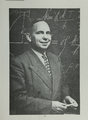
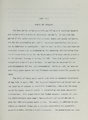
Show 54 with the application of quantum mechanics to chemical reactions. On December 31, l932, he presented a previously submitted paper entitled, "Quantum Mechanics and Chemistry with Particular Reference to Reactions Involving Conjugate Double Bonds," to the American Association for the Advancement of Science at the Atlantic City meeting. The paper explained why bromine reacted with a hydrocarbon (butadiene) in primarily one way, even though theoretically two products were possible. This work was an extension of his earlier studies, however, now it was apparent that Eyring's quantum mechanical models applied not only to inorganic reac- tions, but also to organic ones. Professor Hugh Taylor thought that the results of this work were so significant that he nominated Eyring to the AAAS for its annual prize (later named the Cleveland-Newcomb Award) and used his influence to pursuade the committee to give Eyring the award. The committee agreed with Taylor and Henry Eyring became the tenth recip- ient of the $l,OOO annual award. Hhat followed was an interesting display of public praise for Eyring and his scientific work. At Princeton, headlines read "Chemist Nho Works in Library Wins Coveted Award"; The New York Evening Post announced "Science Prize Won by Princeton Man, Henry Eyring, 32, Gets $l,000 for Improving Chemistry by Use of Physics"; The New York Herald Tribune with Eyring pictured read "Atomic Physics Solves Puzzles of Chemistry"; the front page of the San Francisco Chronicle read "U. C. Graduate Awarded $l,000 Prize for Outstanding Paper"; and in Safford, Arizona, the local paper's headline read "Pima Is Proud of Eyring's Success." Friends of Eyring even reported seeing the headlines describing his achievement on the electric sign around the Times Square Building in New York City.3 A New York Times article for January l, l933 was typical of what |