| OCR Text |
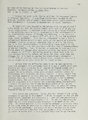
Show 136 carried a $l,000 honorarium. Sir Hugh Stott Taylor, who had been knighted by the Pope and the King of England, and who was the recipient of the first Dickinson Priestley Award in l952, had the pleasure of introducing Eyring at the awards ceremony held at Dickinson College on March 28, l974. This was the last time Eyring saw his distinguished friend and advocate, for ProfesSor Taylor died three weeks later. Eyring took an active interest in many aspects of science besides chemistry. To enhance such associations he became a member of the American Association for the Advancement of Science in the l930's. At Utah, he became more actively involved in the organization, and in 1958 he became president of the Pacific Division of the Association. In l96l he was appointed to the organization's Board of Directors for a five year term. As a member of this board, he was concerned with scientific policy for the federation's over 300 scientific societies and its more than 90,000 individual members. With such involvement and his reputation as a physical chemist, it is not surprising that Eyring became President- elect of the Association in l964. To introduce the new President-elect to members not familiar with him, his good friend and colleague, Dean Carl J. Christensen wrote a concise but informative three page biography describing Eyring's involvement in science and something about his unique personality.20 In January l965, Eyring officially assumed his duties as 1 President of the AAAS, the largest scientific organization in America. As presiding officer of the ll5 year old federation, he emphasized, in one of his principal messages to its members, the changing nature of science and the dilemma of scientific advancement (the power to build a better world and at the same time, the power to destroy it) and the essential nature-of a scientific theory.21 Eyring attempted to explain |