| OCR Text |
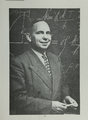
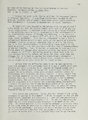
Show 34 summer to provide him with additional experience. The work underground made it clear to him that mining was not the business he wanted to be in. For one thing, the work was dangerous. On one occasion when he was work- ing as a timberman, a large rock fell on his left foot, partially fill- ing his boot with blood and placing him on the disabled list for a short time. During another shift on which he was working three separate fatal accidents occurred. Also, to Eyring the morals and rough lifestyle of miners were not particularly attractive. The risks seemed too great and even though as a mining engineer he would not personally have to take these risks, he would have to send others into the mines who would. The summer's work convinced him he should find another field of study. He decided to finish his mining engineering degree, then switch to metallurgy and do graduate work in that field the next year. The summer after his graduation in l923, Eyring and his younger brother Edward went to work at the Phelps Dodge Corporation in Bisbee, Arizona. Even though the work was mining again, the attraction of the higher pay, especially compared to farm wages, kept Eyring there. mining operation at Bisbee was much safer than that at Miami. The Eyring, however, was still determined to leave mining and he applied for a fellowship from the U.S. Bureau of Mines to do graduate work in metallurgy. The fellowship was granted and in September l923, Eyring was back in school in Tucson. The new start brought greater concentration on the subjects of geology and mineralogy for Eyring. In addition, he took his first course in physical chemistry from Professor Theophyl Buehrer, a graduate of the University of California at Berkeley, and he continued to take courses in mathematics. But the majority of his time was occupied in research. |