| OCR Text |
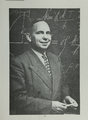
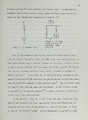
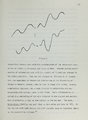
Show 45 research. The year with Polanyi was one of the most exciting and produc- tive in Eyring's life. Dr. Polanyi, born and educated in Budapest where he obtained his M.D. degree, turned to physical chemistry at Karlsruhe. appointment at the Kaiser Wilhelm Institute in l922. in charge of the kinetics division of the laboratory. He received an Later he was placed In l933 he re- signed his post in protest against German anti-Jewish legislation. From 1933 to 1948 he was professor of physical chemistry at the University of Manchester in England. During later years of his career he turned to philosophy and was professor of social studies at Manchester until l958 when he retired.27 In addition to Polanyi, the Institute was the home base of some of the greatest physical chemists in Europe,28 and Eyring found himself immersed in a society of scholars such as he had found at Berkeley. When Polanyi arrived in Berlin, he and Eyring first worked on the alkali-halogen flame reactions, work Polanyi had been interested in. After a brief period of experimentation and spectroscopic analysis of these reactions, they turned to some new studies on reaction kinetics. The year before Eyring's arrival, Fritz London had presented a paper for the sixtieth birthday of Professor Haber, in which he presented an approximate equation, using quantum mechanics, which made it possible to calculate the potential energy for three or four atom reactions. Since potential energy was determined by the distance between atoms, Eyring and Polanyi thought it would be interesting to actually draw a potential surface, a graph of distance versus energy. The first attempt, using three hydrogen atoms on a line met with disappointment because of the difficulty of getting certain numbers in the experimental results |