| OCR Text |
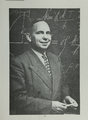
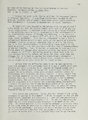
Show 85 This delegation of authority was even apparent in the Dean's office where Eyring gave as much authority as he could to his secretaries. occasionally resulted in amusing problems. This One such case involved the matter of signatures on special documents, particularly financial papers. The administration required the signature of the Dean on these important papers, but for routine documents Eyring had given his secretary authority to sign his name. Eyring was gone a considerable amount of time for various lectures and consulting visits. Since he was unable to be in Salt Lake City to sign all financial documents, he often delegated this to his secretary, too. On one occasion when he did sign such a document, it was sent back for the correct signature. He promptly had his secre- tary sign the paper and it was sent off without incident. Eyring recalls that when he came to Utah he was going to pattern the graduate school after the one at Princeton. But his first secretary, Priscilla Winslow, had spent considerable time at Harvard University as an administrative secretary. As a result, Eyring jokingly says, "The graduate school turned out to be like Harvard's instead of Princeton's."5 For Eyring, his secretaries were immensely valuable and gave him the time required to continue his research. It is little wonder that he proudly refers to them as the real "deans" of the graduate school.6 Interest- ingly though, Eyring never hired a secretary while at Utah. Miss Winslow was appointed by the school and each successive secretary was chosen by her predecessor. Eyring felt that the secretary in the Dean's office knew more about what needed to be done than he did, so when a secretary was to leave, she was charged with selecting her successor.7 the policy was successful throughout his twenty years as Dean. For Eyring, He had devoted trust and confidence in his Secretaries and treated them with |