| OCR Text |
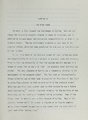
Show 35 Under the direction of Professor Thomas Chapman, he did extensive work on the differential flotation of copper minerals in heavy sulfide ores.4 The results of his master's thesis, "The Separation of Heavy Sulfide Ores by Selective Flotation," were subsequently published, with due credit, by a man at the Bureau of Mines. At the time Eyring did not understand or realize that he could have published the results of the work himself. With a master's degree in metallurgy, Eyring easily found new work in this field. In the summer of l924, he was hired by the United Verde smelter at Clarksdale, Arizona and was given the opportunity of seeing the various aspects of the smelting operation, training necessary for any metallurgist. But as in mining, smelting also had its negative aspects. Eyring relates: After being there a few weeks, I was assigned to take samples from the blast furnaces. The sulfur dioxide smoke was especially strong, and I was holding a handkerchief soaked in baking soda over my face when the smelter superintendent came by, slapped me on the shoulder, and said, 'Eyring, I plan to put you in charge of the blast furnaces in a few weeks.I The problems were intriguing, but the sulfur smoke made it easy for me to returE to the University of Arizona as a chemistry instructor. Eyring almost turned down the University's offer when he learned that his salary would be $l,400 instead of the $l,6OO he had first been told about. However he accepted and was given the responsibility of conducting the chemistry laboratories for various chemistry classes. In his spare time, he was allowed to broaden his chemistry studies by attending classes. The first semester he took advanced physical chem- istry from Professor Lathrop E. Roberts, a graduate of the University of Chicago and general organic chemistry from Professor Ernest Anderson, chemistry department chairman. During the second semester he had another general organic chemistry class and electro chemistry from Dr. Buehrer. |