| OCR Text |
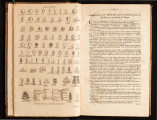
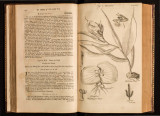
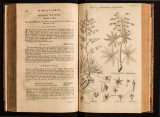
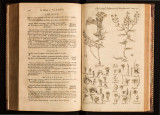
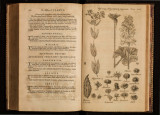
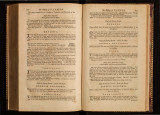
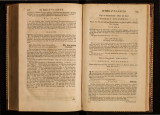
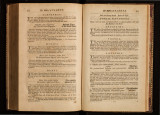
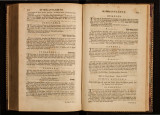
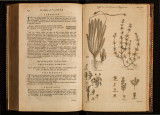
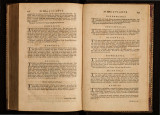
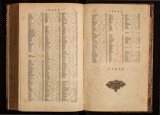
Show The Hijlory of P L A N T S. Aconitum Joliorum laci11iis linearibus, dijlinElis, u!J'ique ejufdem latitudinis. 'I he Aconite, with the figments of the leaves linear and dijlinEl, and all the way of the fome breadth. The root is compofed of a number of oval tubera, furnilhed with fome fibres. the are brown. w~t~out, ~nd white wit?in; the plant grows to a foot, or more, in h~ight~ the fialk IS ngtd, ftnated, and hauy: the leaves are divided into long, narrow fegments, of a dufky green on the upper fide, and hoary underneath: the flowers are moderately large, and yellow, and are of a good fmell. It is a native of th~ Alps and Pyrenees ; it's root is kept in the l11ops, under the name of ~nthorre Radtx, and fuppofed an alexipharmic. C. Bauhine calls it, Aconitum falutlferum. The ~t~er fpecies of Ac~nite are, r. The plantain-leaved, yellow Aconite. 2 • The finely, dtv1ded-l~aved Acomte. 3· The great, blue Aconite, or Napellus. 4. The narrow-leaved, mflex-fpiked Aconite. 5· The broader-leaved, reflex-fpiked Aconite. 6. T~e dwarf, blue-flowered Aconite. 7· The many-flowered, pyramidal-fpiked Acomte. 8. The tall, dark-leaved Aconite. Clafs the Thirteenth. Order the Fourth. P 0 L Y A N D R I A T E T R A G Y N I A. P /ants whic'h bave numerous }lamina and four )lyles tn each flower. TETRA CERA. -T HE calyx is a permanent perianthium, 'compofed of fix roundiili, patent leaves; the extenor ones alternately lhorter: the fiamina are numerous iimple filaments, of t?e length of the calyx; they are permanent, and the antherre ~re fim· ple : the germma are four,. oval and feparate from one another : the fi:yles are fubu· lated and very lhort; the !bgmata are obtufe: the fruit is compofed of four capfules . !hey are of an oval figure, re~~x, formed each of a fingle valve, opening by a futur~ m the upper part, and contammg only one cell: the feeds are fingle roundilh and covered. ' ' This is an American defcribed by Houfi:on, but confounded with the Petrrea. Clafs the 'Yhirteenth. Order the Fifth. POLY ANDRIA P E N T A G Y N I A. P /ants which have numerous )lamina and jive }lyles in every flower. A Q_ U I L E G I A. T H fE R 1 E is no calyx; the corolla confifis of five plane patent equal petals o a anceolato-.o vate figure ·· the ne~..n-L art• a are fi ve m· nu'm ber; t'h ey are equal,' and fi~nd alternately wtt? the ~etal~: they are corniculate, and grow gradually wider at t~etr upper lart ~ thetr openmg ts oblique, afcending upwards, and internally affixed to t e receptac e; m the lo~e.r part they are carried into a tube, which is long, attenuated, pendulous, and has It s extremity obtufe and crooked : the fiam ina are nu-mthe rous,h fubulatedb l filaments ' from th'u ty to r1 orty ; t h e exten·o r ones are th'e fhorter : / ant erre are o ong, ereCt, and of the height of the netlaria : the germ ina arc five 0h a~.ovato-oblong figure, and terminate in fubulated fiyles lonaer than the fiamina ~ t e nigrnata are erect and fimple Th l1 ' b ' the germina . th f . fi • ere .are ten 1ort, rugofe palere, which feparate each confifl:s ·of ~ fi~1 \~on 1 Ifis of five fi:ratt, parallel, c~lindric, acuminated capfules; 1 • g va ve, and opens from the top mwards : the feeds are nume-rous, ova , cannated, and adhere to the future. .Aquilegia The Hijlory of P L A N T S. Aquilegia neElariis incurvis. The Aquilegia, with crooked neEJaria. Qtontmon Qtolutnbtne. The root is large, oblong, and fibrated; the plant rifes to two feet high : the fl:alks are fiender and branched ; the leaves are of the compofite kind ; their pedicles are ufually divided in a ternate manner, and the leaves are three on each ultimate pedicle; they are broad, and of a bluilh-green : the flowers hang from the tops of the ftalks ; they are large, and naturally of a beautiful blue, fometimes reddi{h or white. C. Bauhine calls this, Aquilegia fylvellris ; others, Aquilegia fimplex five vulgaris.Culture makes a great variety in the colour and ftrueture of the flowers, rendering them double, &c. Tournefort and others have defcribed all thefe varieties as dillinCl: fpecies, under the names double Columbines, rofe Columbines, and the like. The other really dillinet fpecies are, I. The early, dwarf Aquilegia, with firait nectaria. z. The {mall-flowered, thalietrum-leaved Aquilegia. 3· The great-leaved, fmaller- flowered Aquilegia. NIGEL L A. T H E R E is no calyx, though in fome fpecies the floral leaves give an appearance of one : the corolla confills of five plane, oval, obtufe petals, patent, and narrowell toward the bafe: the nectaria are eight, they are very lhort, and are placed in a circular direCtion; and each is bilabiated : the outer lip is the larger, and fiands loweO: i it is bifid, plane, convex, and marked with two dots : the interior one is lhort and narrow; the fiamina arc numerous, fubulated filaments, l11orter than the corolla : the anthercc are comprefied, obtufe, and erect : the germina of the pillil are, in fome fpecies, five, in others ten; they are oblong, compreffed, convex, erect, and terminate in fubulated !lyles, which are angular, very long, revolute, and permanent: the ftigmata are longitudinal and adnate: the fruit confifis of as many capfules as there were germina ; they are oblong, compreffed, acuminated, joined by an internal future, and open upwards and inwards : the feeds are numerous, angular, and rough. Nigella Joliis involucro Joliofo cinE/is. The Nigella, with the leaves furrounded with a Joliqfe involucrum. <!I:onunon ~tgetln~ The root is oblong, hard, and yellow; the plant rifes to a foot and half high: the fia\k is a foot high, fmooth, ftriated, and hollow; the leaves are divided into a ~numer of fine narrow fegments : the flowers are large, blue, and furrounded at the bafe with five floral leaves as with a cup. It is a native of France. C. Bauhine calls it, Nigella angufl:ifolia flare majore iim-plici c<Eruleo. · . . The other fpecies are, 1. The yellow, onental N1gella. 2. The hairy-leaved, white-flowered Nigella. 3· The Spanilh Nigella, with broad leaves, and large blue flowers. 4· The Cretic Nigella. Authors have taken varieties for fpecies, and have extended the number much be-yond this. Tournefort mentions a red-flowered, a white-flowered, and the like, as fpecies which are, in reality, only varieties of the common kind. Clafs the Thirteenth. Order the Sixth. P 0 L Y A N D R I A P E N T A G Y N I A. Plants which have in every flower numerous )lamina and fix ftyles. STRATIOTES. T HE calyx is a permanent fpatha, formed of two leaves, compreffed, obtufe, connivent, and carinated on each fide : befides this, there is alfo a perianrhium, which is formed of a fingle leaf, divided into three fegments, and is acute and decidu- 6 If ous : |