| OCR Text |
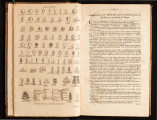
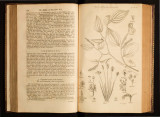
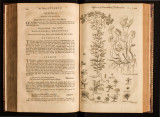
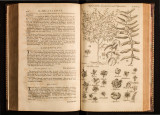
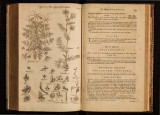
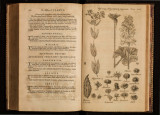
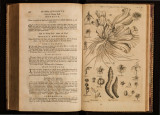
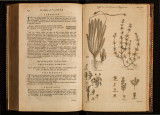
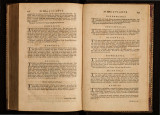
Show The Hijlory of P L A N T S •. M 0 s s E s. Clafs the Seventh. Genus the Third. S E LEN I A4 S E LEN 1 A is a genus of Moffes, confifting of a foliaceous matter, arid exhibiting male and female organs of fructification on different parts of t~e fame plant. Th le flowers fiand on long pedicles, which grow from vagmro on the le~ves of h f rna Th · a common perianthium confifiing of four fegtnents, d1fpofed ! e p an~i- e cuperls when ripe and containing four flowers. The ftamen is a fingle m a cruc11orm mann , , . · 1 b' d fil ament, un dI,V I'd e d and longer than the corolla , whiCh IS monopeta OUS, tU.r ma[t!e , and lhorter than the cup. The anthera, on the head of the ftamen, opens mto our fe ments, and difcharges a farina affixed to ~ne fi.lamen~s. . . . . gThe female flower is compofed of a penanthmm Without a corolla ; thi.s 1s mono-etalous and undivided and is affixed to the leaves in form of a crefcent; m the hol-fow of this there are lodged a number of green, roundilh, flatted feeds. . ., Dillenius blends this genus with the two farmer, under the common name Lichen, as does alfo Linnreus, under that of Marchantia .. Micheli feparates.them, and ca~ls this Lunularia, a word too nearly lik~ the L~nana, a name of a different plant m found. There is only one known fpectes of thts genus. S ' ' E L E N I A. This is a fmall, but very beautiful plant. It generally grows i11 confiderable quantities together, and it's leaves lie in an imbricated manner o~er o~e another. They. are from half an inch to an inch in length, and near half an mch m breadth ; fo~eumes fimple, fometimes divided into three or four lobes. They are tnode~atel~ th1c~, n?t pellucid, and of a tolerably bright green colour. There are no vems d1fcermble 1!1 them, bllt they look, as it were, fquammofe ; on the under fi~e there are fine lanugtnous roots, of a whitilh colour, difpofed in a row along the middle of e~ery leaf: .and fometimes in ramifications from that; from the middle of the leav.es an_fe the pedtcles that fupport the male flowers; they are about three quarters of an mch m length, and moderately thick. The fegments of the perianthiurn are hollow. !he female flowers or lunules are found on different parts of the plant, and that m great number, each containing a large quantity of feeds. . This plant is frequent about.Lo~don on old. walls., and mother damp pl~ces. It flowers in July and Augufi. Dtllemus has def~nbed It ~nder. the name of LIChen f~minifer, lunatus, florifer, pileatus, tandem cructatus. Mtcheh, u?der th.at o~ Lunul.a~~a vulgaris. Linnreus, under that of Marchantia calyc: co~mum qu~d~tpartlto lacmus tubulofis. Other of the botanical writers have called lt) Ltchen femm1fer parvus, and Lichen petrreus acaulos. M 0 s s E s. Clafs the Sevent~. Genus the Fourth. J U N G E R M A N N I A. J UNGER M ANN I A is a genus of Moffes, confiO:ing ufually of fl:a~ks furniChed with leaves, difpofed in a pennated or fquammole manner ; fomeumes of leaves only; and producing vifible male and female parts of fi·utl:ification. . The male flower ftands on a long firait pedicle, which arifes out of a vagma, growing from the upper part of the furface; it has neither calyx, nor corolla, but c.onfifis only of an anthera, which is at firft of an oval figure, but afterwards opens mto four fegments, and remains in this ftate a long while on the plant. The The Hiflory of P L A N T s. t 2t The female flower has no pedicle, but fl:ands fometimes on the fame plant, fametimes on another of ~he fa~e fpe~ies; on the extremities .of the branches of the plant, or on other parts of 1t, There IS no calyx or corolla v1fible, but all that is feen is a number of feeds lying naked in a clufier, fometimes only a .fihgle one. Dillenius has given this genus of Moffes the name of Lichenafirum. Linnreus and Micheli call it, J ungermannia ; but the latter ras defcribed and figur~d fome of it's fpecies, under the name of Mufcoides, and others under that of Marfilea. 1. Jungermannia pennata vagina dent at a. Pennated Jungermannia, with a dentated vagina. This is a very elegant little plant. It grows to two or three inches in length ; it's branches are fometimes fimple, fometimes divaricated ; they are befet on each fide with a row of fine, pellucid, bright green leaves, broad and obtufely pointed. The branches, thus pennated, fomewhat refemble thofe of the trichomanes. The pedicles which produce the male flowers are about an inch long; they arife out of oblong vaginre, dentated at the edge, and placed fometimes in the middle, fometimes near the bafe of the plant. The anthera is round at firft, but divides into four parts. The feeds are numerous, and very fmall, and are di(perfed over feveral parts of the plant, but principally about the ends of the branches. It is found in our woods among the other Moffes, about the ftumps of old trees; it flowers in April and May. Dillenius calls it, Lichenafirum trichomanis folio e bafi et medio florens. 2. Jungermannia divarlcata pediculis brevibus. Divaricated Jungermannia, with jhort pedicles. This is a very fingular plant. It grows to two or three inches in length, and often fpreads to near as much in breadth. It grows from it's bafe with a fihgle fialk, of the thicknefs of a fmall twine, but not round ; this fends off a number of branches, and thofe afford yet others, and towards the extremity the main ftalk itfelf divides into feveral portions, all branched. The ftalks are all covered with hollow leaves, in a double feries, the upper larger than the under, and of a fomewhat triangular figure; they are green at firfi, but afterwards become of a purpli!h brown. The whole plant hangs loofe from the thing it grows on, and, at the extremities of it's feveral ramifications, produces oblong vaginre of a fquare figure, and divided at the top into four fegi?ents ; from thefe arife !hort pedicles, fcarce a fifth of, an inch long; beyond the vagma, and on the heads of thefe ftand the anther.re, one on each ; they are tumid and roundilh, and finally burfi into four fegments : the feeds lie in clufters at the extremities of the branches. It grows on rocks, and on the trunks of old trees in our woods : it is plentiful enough about London. Dillenius has defcribed it under fhe name of Lichenafl:rum imbricatum tamarifci Narbonenfis facie. Linnreus calls it, Jungermannia foliis imbricatis ferie duplici, fuperioribus, fubrotundis, majoribus, convexis, obtufis, majoribus. 3· Jungermania Joliofa pediculis longiflimis. The leafy Jungermannia, with very long pedicles. This fpeci:s diffe~·.s extreamly from the two former, in that it is not compofed of' branches furm!hed with leaves, but of leaves only, and tnuch refembles the felenia in figure. It generally grows fingle. It's leafis about an inch long, and half an inch or lefs broad, finuated at the edge, and ufually divided into two or three lobes. It is of a bright green colour, and is affixed to the ground by a feries of roots running all along it's under part; when not in a flowering ftate, it would never be fufpected for a Jungermannia: from the middle of the leaf arifes a !hort dentated vagina, and from this a very long pedicle, on the fummit of which appears the anthera, roundi{h at firfi, but afterwards dividing into four fegments. It is not uncommon about the banks of rivers, and in other moifl: places. It flowers in March and ApriL Dillenius has defcribed it under the name of Lichenafirum capitulis rotundis e foliorum medio enafcentibus; and Micheli, under that of Marfilea major, atrovirens, floribus albicantibus e foliorum medio enatis. I i 4· ./un- |