| OCR Text |
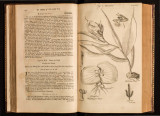
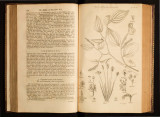
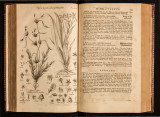
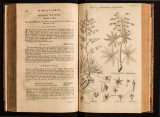
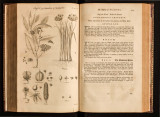
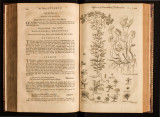
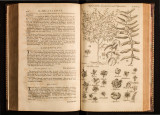
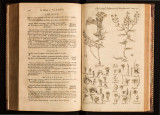
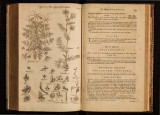
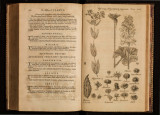
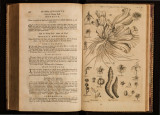
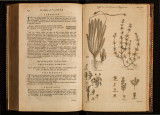
Show The Hiflory of P L A N T s. 153 geniculated, diffufe, and fpreading, and of a gloffy furface, and red colour. The leaves are of an ovated figure, and thick, fleD1y firucture: they are of a bright green colour, and reddiili at the edges. The flowers fiand towards the top of the plant; in the alee of the leaves they are of a pale red on the outiide, and of a deeper, or purplilh, ted within, efpecially near the mouth. The fiyle is of a deep purple; the ftamen is alfo purple, the anthera yellow. The plant is a native of the Eaft Indies, principally about Montan. It loves a rocky or fandy foil: it fucceeds very well in our fioves, and produces it's flowers and fruit there. Vaillant calls it, Antanifophyllum folanifolium majus. Rheede, Talu Dauca; Linne£us, Boerhaavia diffufa, and Boerhaavia foliis ovatis. The Indians ufe the outer part, or bark of the root, as a purge, but it is not known as a medicine in Europe. H I P P U R I S. ~HE calyx of the Hippuris is fcarce diftinguilhable. It confifts only of two ex.1. treamly fmall margins, fianding oppofitc to one "another, on the head of the germen. Ther~ is no corolla: the fiamen is a fingle filament, fixed on the receptacle of the flower. The anthera is very ilightly bifid. The germen of the pHlil is oblong, and placed under the receptacle : the flyle is fingle, fubulated, and erect; it is placed within the fiamen, and is longer than it. The fiigma is acute; there is no pericarpium, but after every flower there comes a feed~ which is roundilh and naked. This genus comprehends the Limnopeuce of Vaillant, and the Pinaftella of Dillenius. There is only one known fpecies of it. H I p p u R Is. ,. The root of the Hippuris is compofed of a number of reddilh, or b]ackifh, articu· lated, oblong parts, which fpread themfelves every way on, or juft under, the. furface of the mud, and fend down from every articulation a number of capillary fibres. The ftalks arife frcun feveral parts of the root, fometimes fingly, fometimes three or four together. They are round, jointed, like fmall reeds, and of the thicknefs of a large rulh : they ftand erect, and are largell: at the bafe, whence they gradually grow fmaller to the top, where they terminate in a point. The joints frand very clofe, and the whole ftalk is finooth, not ftriated: the leaves are lhort, and ftand in form of rays round the flalk, at the feveral joints. The whole plant grows to two feet high, and the leaves are narrow, and fomewhat refemble thofe of the firs, from which, and from the regular growth of,the plant, many have compared it to the pines and firs. The leaves are of a pleafant green colour, and round ahout the articulations there lie fingle naked feeds, of an oblong figure, and reddiih brown colour; ten or twelve of thefe often grow round each articulation. This plant is a native of England, but it is not common with us. I have obferved it in Leicefteriliire, and in Y or kihire; it fometimes grows in the waters, iometimes on the mud, about their edges. Cordus calls it, Limnopeuce, Hift. 1 50. Ruppius, Pinaftella furreCl:ior. C. Bauhine, Equifetum pa,lufire brevioribus foliis polyfpermon; and Rudbeck, Polygonum polyfpermum. Many of the old writers have alfo called it, Polygonum fremina. lVlofi: of the botanical authors have confounded the equifeta with this, and this with the equifeta, but they are very difiinct genera. The char<£ have alfo as erroneouily been confounded with this genus, and with the equifeta, though widely different from both. S A L I C 0 R N I A. T HE calyx of the Salicornia is of a tetragonal figure, truncated, bellied out, and permanent. There is no corolla. The ftamen is a fingle, fimple, capillary filament : the anthera is roundilh. The germen of the pifiil is of an oblong, ovated figure: the ftylc is fimple, and placed under the fiamen, and the ftigma is bifid. There is no pericarpium, but the calyx becomes more ventricofe, and contains a fingle feed. Rr I. Sa/icornia |