| OCR Text |
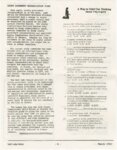
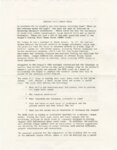
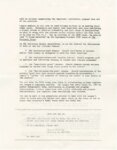
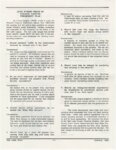
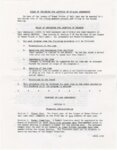
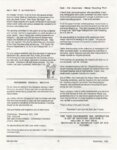
Show THE CHILD ENFORCEMENT PROGRAM For the first 200 years of the nation's history, it was a given that family relations (divorce, custody, support, legitimacy) were a matter of purely state law: the federal government had no business enacting laws in this area. Mounting public concern for child support, stemming from the rapidly increasing number of single public assistance recipients who are heads of households with dependent children, has spurred governmental interest in the child support issue. The realization that the taxpayer was carrying a weighty financial burden that easily could be assumed by parents led to changes in federal legislation. In 1974, Congress added Title IV-D to the Social Security Act. Under this law, all states participating in the AFDC program are required to also have a child support enforcement program to help locate absent parents, establish paternity, obtain support orders and enforce those orders. These services are available to those who receive AFDC and to any other custodial parent who requests assistance • and pays a small fee. In 1984, Congress overhauled the IV-D system. The new statute required states to enact a variety of laws including: wage withholding when the absent pare·nt's payments were in arrears; allowing the establishment of paternity any time up to a child's 18th birthday; and the development of guidelines to use in setting support awards. These new requirements applied not just to those using the state IV-D system, but to everyone. In 1988, Congress went even further. Under Title I of the Family Support Act, the states will have to further amend their family laws to require that: * Effective November 1989, all parties to a contested paternity action must submit to genetic testing. * Effective November 1990, parents must furnish their Social Security number to the state's birth records agency as part of the process involved in the issuance of a birth certificate. * Effective October 1989, decisionmakers must use the state's child support guidelines in establishing or modifying support awards unless to do so would be unjust or unreasonable. (Federal officials estimate this provision will triple the size of the average child support award.) * Effective October 1989, the state's child support guidelines must be updated at least once every four years. * Effective January 1994, all new child support orders must provide for collection through immediate wage withholding unless both parents agree to an alternate arrangement or the court finds good cause for not ordering it. If the case is being handled by the state IV-D system, this provision is required to be in effect even earlier (November 1990) and applies to modifications as well as new orders. -4- |