| OCR Text |
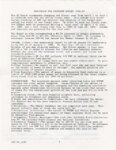
Show Work Programs for Welfare Recipients offers voluntary participants career planning assessments, education and training, supported work, health insurance, subsidized child care and transportation subsidies. It's important to note that in FY 1986, Massachusetts spent approximately $18 million, or nearly one-half of its ET budget, on child care. Another experimental program, the Greater Avenues for Independence (GAIN) program in California, is just getting under way. Initial evaluation data has found that a substantial number of enrollees need extensive remedial education, pointing out another roadblock for low-income people seeking to enter the paid labor force. Historically, only a handful of work programs required women with preschool-age children to look for work or enter job training programs. Now, there is increased pressure to require mothers-sometimes those with children as young as six months-to participate, because of data that suggests that young, unmarried women who enter AFDC when their children are less than three are at greatest risk for becoming long-term dependent. But child care and other support services are costly and, as a result, many state and local agencies have developed formal or informal screening mechanisms, which have the effect of serving the most ''job ready'' recipientsthose without preschool children or with demonstrated work skills. Because of this so-called ''creaming,'' many observers question whether those actually receiving services would have found jobs on their own without assistance from an AFDC agency. There is increasing pressure to change the programs so that the least job-ready recipients-that is, long-term welfare recipients-receive assistance first. Legislation pending in the U.S. Congress-known by its acronym JEDI • (Jobs for Employable Dependent Individuals)-would provide bonuses to states that have successful job placement rates for long-term welfare recipients. None of the work program proposals being debated in Congress seem to acknowledge that most adult welfare recipients are single parents who bear the dual burdens of providing both the emotional and financial support for their families. Few politicians are proposing programs that would offer more options to welfare recipients, such as part-time work supplemented by welfare benefits or an increase in the minimum wage, that would help parents meet both their financial and parenting responsibilities. A 25-year debate over the entitlement nature of welfare programs may be headed for resolution in the near future. The question no longer seems to be '' Should welfare recipients be required to work in exchange for their benefits?'' but rather ''How should work programs for welfare recipients be structured?'' Two factors are primarily responsible for this philosophical shift. First, the AFDC program has grown dramatically. Between 1960 and 1970 the number of families receiving assistance rose from 800,00 to 2.2 million. Total payments increased from nearly $1 billion to $5 billion during that decade alone. Second, the tremendous influx of women into the paid labor force has changed societal norms about the relationship of mothers to work outside of their homes. The shift in policy direction began with the enactment of the Work Incentive (WIN) Program in 1967, which in 1971 began requiring all adult recipients of AFDC without preschool age children or other specific problems that kept them at home to register with the state employment service, to participate in job training or job search activities and to accept offers of employment. The 1981 Omnibus Budget Reconciliation Act (OBRA) authorized three new work programs for welfare recipients: (1) WIN Demonstrations, which allowed states more flexibility in designing their WIN programs; (2) Community Work Experience Programs (CWEP)-often referred to as "workfare':.which allowed states to establish programs requiring participants to work off their benefits in unpaid work assignments and (3) work supplementation or grant diversion programs, where the participant's welfare grant could be used to subsidize a job in either the public or private sector. In 1982, job search programs were added to the list. By January 1987, 42 states were operating a total of 92 new programs offering a variety of services, including individual and group job search, direct job placement assistance, unpaid work experience (CWEP), WIN work experience (limited to 13 weeks), on-the-job training, remedial or basic education, subsidized work experience, vocational skills training or post-high school education. In practice, however, the emphasis has been on low-cost programs, such as job search services, which do not increase the skill levels of participants. The most publicly acclaimed of these programs is the Massachusetts ET Choices program, which 3 |