| OCR Text |
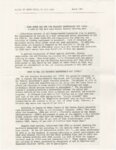
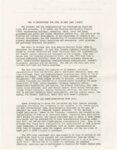
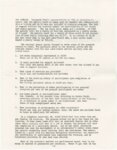
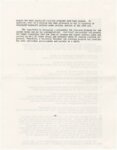
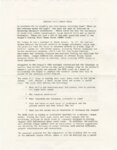
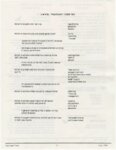
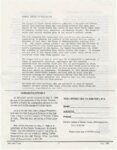
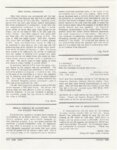
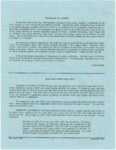
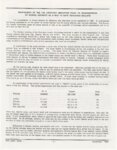
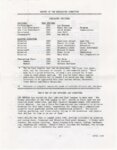
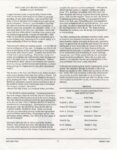
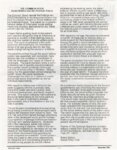
Show PROPONENTS OF THE TAX LIMITATION INITIATIVE S POINT TO CONSOLID ATION OF SCHOOL DISTRICTS AS A WAY TO SAVE EDUCATION DOLLARS The consolidation of school districts for efficiency was discussed at the legislature in 1987. A controversia l bill forcing consolidation of the states' 40 school districts into 29 county districts was narrowly defeated. The Education Interim Committee asked all school districts to look at the possibility of voluntary school consolidation and to report back to them this fall. The October meeting of the Education Interim Committee featured a report on the consolidation of Salt Lake County districts--Salt Lake City, Granite, Murray and Jordan. The study focused on fiscal impacts only. Although consolidation seemingly should be a simple task, things such as tax rates including the voted leeway and bonded indebtedness on the revenue side and instructional costs including salary schedules, benefit levels and non-personn el costs, as well as administrative costs on the expenditure side much be considered. An examination of the study provides a quick view of the four school districts and priorities that each district's patrons have, as reflected in their budgets. The study looked at consolidating Murray, the smallest of the Salt Lake County districts, with either Granite or Jordan. The study found no financial reasons for Granite to support consolidation with Murray, the likelihood that consolidation of Jordan and Murray would result in a substantial increase in instructional costs in Jordan because of the higher salary and benefit level in Murray. There were financial and other reasons for Murray to oppose consolidation with either Jordan or Granite. However, a recent newspaper article reported that Granite may be forced to consider consolidation with Murray because recent annexations by Murray severely cut Granite's tax base. On the revenue side, property tax rates would have to be readjusted. State law provides that in the event of consolidation, only differences in tax rates to pay for preexisting debts are permitted. The Salt Lake School district has the highest tax rate (including the highest voted leeway level in the state) while Jordan has the lowest tax rate. If the lowest rate were applied to all property, a $7.312 million revenue shortfall would occur. If the highest rate were applied county-wide, the revenues would rise by $6.582 million. If taxes were imposed to maintain existing levels, taxes would go up in Granite, Jordan and Murray while Salt Lake City taxes would go down. An examination of the current expenditures per pupil in 1986-87 reveals some of the complexities of consolidation of the four districts. The current expenditures and their position in the state are: No. of Expend Pistrict Students per Pupil Jordan Granite Murray Salt Lake City 61,047 73,098 6,337 24,508 $2,195.84 $2,253.48 $2,417.13 $2,791.06 State 35 34 26 10 Class size, teacher salary and benefit levels and non-personnel costs are all reflected in expenditures. Salt Lake City has the lowest class size of 21 .5 students in average daily membership while Murray has the largest with 25.3 students. In any reorganization effort, efforts to equalize the class loads would be strong with resulting instructional and capital costs. As an example, reducing the class size by one student in the Jordan district would result in the construction of three new elementary schools at a cost of $3.5 million each. Differences in teacher salaries and benefits also exist. Granite has the highest teacher salary schedule, Murray the highest average salary per teacher and Salt Lake has the highest benefits while Jordan has the lowest. In nonpersonnel costs such as books, instruction supplies and equipment, Granite spends $64.1 o per student, Jordan, $68.88, Murray, $113.05 and Salt Lake, $131.64. In its survey of options, the study concludes that under the scenario where class sizes were equalized at the highest level, salary and benefits lowered to the lowest level and the non-personn el Salt Lake Voter - 3 - November 1988 |