| OCR Text |
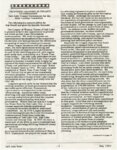
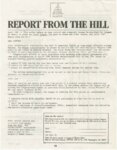
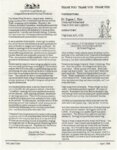
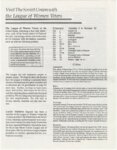
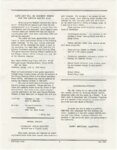
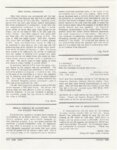
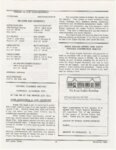
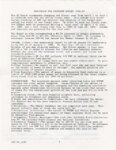
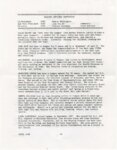
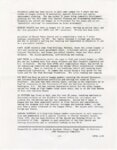
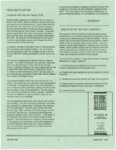
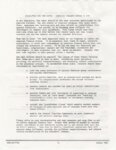
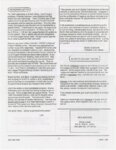
Show _;;IR QUALITY by Linda R. Clark Editor's note: This past spring, a report from the National Clean Air Coalition (LWV-US is a member) listed Salt Lake City among the top 100 smog-plag ued U.S. communiti es. But the story is worse than that. Virtually the entire Wasatch Front exceeds federal air quality standards . The LWVU supports vigorous pollution abatement procedure s based on health, economic and aesthetic justifica tions. In the following report, Linda Clark, Utah County LWV president and clean air activist, asks some crucial questions about Utah's attempt at air clean-up. What has happened since the LWVU studied air quality in 1968 and 1970? * The Environm ental Protectio n Agency was formed. * EPA has set standards for only seven critical pollutant s in 18 years; hundreds of others remain unregulat ed. * The Utah Bureau of Air Quality was formed. Does this work? No. Virtually all people living along the Wasatch Front between Spanish Fork and Ogden are breathing air that exceeds EPA standards for pollutant s. Who are the players? Utah Bureau of Air Quality: A subdivisio n of the Utah Dept. of Health, the Bureau was formed to help the Utah Air Conservat ion Committee bring the state's air into complianc e with EPA standards . * Utah Air Conserva tion Committee : Formed in 1967, this is the only committee with a statutory power to make policy. By statute, members include one represent ative each from the fuels industry, agricultu re, manufactu ring, municipal and mining; three represent atives from the public; and an engineer, the state environme ntal director and a doctor. Emily Hall represent s LWVU on ACC. The LWVU's 1970 air quality study quotes Gov. Rampton's concern about the committee being partly made up of represent atives from the very industrie s being regulated . The committee can vote to grant variances and extension s to polluting industrie s. Last year, LWVU lobbied for two additiona l members on the committee : one from tourism and another from education . The bill passed the Senate but died in the rules committee . * Governor Bangerte r's Blue Ribbon Commissio n: Formed on the last day of the '88 legislativ e session, the committee consists of 22 members, mostly industria l and local governmen t represent atives. Liz Fisher represent s LWV-U. The Commissi on's powers are only advisory. * Utah County Clean Air Commissio n: Spearhead ed by Utah County Commissio ner Brent Morris, the Commissio n was formed this spring out of dissatisf action with lengthy, ineffectiv e state-lev el air quality plans and the health-th reatening levels of fine particula te matter (PMlO) in the county's air. Linda Clark represent s Utah County LWV on the Commissio n. The Commissio n is diverse and balanced except that Geneva Steel has several represent atives rather than one. The group has made recommen dations for control of PMlO from wood burning, diesel vehicles and road dust, but not from industry. A public hearing, to be held probably in December, will address this latter source of pollution . * Utah Clean Air Coalition : Formed in 1988, members of the coalition include the Utah Environme nt Center, American Lung Associati on, the LWVU and six other citizen and professio nal groups. In May of 1988, the EPA gave notice that Utah's State Implemen tation Plan (SIP} for reducing pollutant s was inadequat e. The state has until 1990 to make a complete SIP revision to significa ntly toughen controls. The coalition is concerned that complianc e will not be done as expeditio usly and efficient ly as required, and that the state will take the maximum three years. |