| OCR Text |
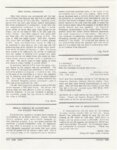
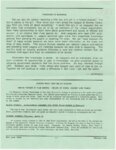
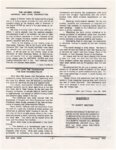
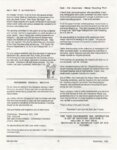
Show B)UCATION NOTES In Salt Lake, the Salt Lake.Area Chamber of Comerce Speeches focusing on what happened to public has released its proposal to deal with Utah's educationchallenge; educating more students with limited. if not shrinking. financial resources. The theme of their report is "We cannot extend the past. We must increasethefuture. The introduction states, Meeting the challenge will require setting aside past differences and biases, pooling resources and talent, being creative and working together. The chamberbelieves that the business community has a clear and direct role and re~onsibility to help meet the challenge. However, the Chamber has not taken a position on the tax rollback referendum. education in California after the passage of Proposition 13 in 1978 and the Salt Lake Area Chamber of Com- merce's education proposal have been on the agenda of the Utah Education Seminar in November and December. The Education Seminar brings legislators, education officials, business leaders and the public (including a League representative), to discuss education issues. Gerald Hayward, Director of the Office of Policy .Analysisfortl1eCal.ifomiaEducationProjectinSacramento, described the effect oftbe proposition on public education as a "slow bleed, not a quick lobotomy. Reduction in the number of class periods was one of the first cutbacks. Schools moved from seven periods a day to six and then five. Tbe class offerings within subjects were eliminated as were elective courses such as vocational education, music, art and drama. Class sizes were raised so that California competes with Utah for having the largest class sizes in the nation. "It's a race which we hope Utah wins." said Mr. Hayward. Summer school and adult education programs were cut. Incentives for early retirement were implemented. Capitol outlay programs for building and maintaining physical plants were slashed. 11 11 The report notes that the crisis is a short-term one of five to eight years. The recommedations are: 1. The development and adoption of a strategic mission statementforUtab 'spublic education and plan system. The plan should include a clear definition of the mission of the public education 5)"stem. as well as establishing the contents of basic education. Also included in the plan are requirements that teachers teach only subjects in which they are qualified and for studentqualificationforgraduation. \Vhat would happen in Utah if the proposed limitation referendum were to pass? California had both budget surpluses and a high level of services, which could be and were trimmed as a safety net to moderate the immediate effects; Utah possesses neither. The li.klihood of renewed economic growth in the state as a result of reduced taxes in the rollback is slim. Roger Tew of the State Tax Commission warned that Utah would need an 18% economic grov.-"th rate to make up the taxes rolled back. Oscar McConkie, who bas served in the Ctah Legislat1.1re and on the l:tah State Board of Education, summed the situation up: "Those who are in favor of public education must be opposed to the tax recall proposition; those who favor the tax recall are opposed to public education." A realization of the cumulative impacts of Proposition 13 and an upturn in the economy were responsible for the business community becoming leaders in the effort to reform education in California.In 1982, a subcommittee of the Business Roundtable in Califomia ( a group composed of top executives of California's most prestigious businesses) became convinced that the economy requires improYed public schools and supported a massive school finance increase coupled with school reform in the State Legislature. They lobbied successfully for an increase in school finances. Salt Lake Voter 11 11 2. In the short-term, no new tax increases for publireducation. 3. A redefinition of the state's constitutional responsibility for providing equalized education to all Utah students. Tile Chamber believes that the State's primary responsibility is to pro Yi defunding for the deli very and supportof tbe basic academic program included in the core cuniculum. lill other programs should be viewed as secondary and state funding provided on a limited basis through block grants and the balanced funding through local taxing districts. 4. Expansion of a differentiated staffing and maximation of the professional service of each certified teacher and administrator. The Chamberrecommends that certified teachers teach the basic curriculum but that l,lesser-trained and lower-paid" aids be assigned othertasks. They also recommend multiple-school administrator assignments and the sharing of full-time contracts between teachers who do not wish to teach fulltime. 5. Increase in the current average pupil-teacher ratio and reallocation of teacher resources to meet the near-termneed. COll'-Ul~a. Oll -5- P•~ 6. January 1988 |