| OCR Text |
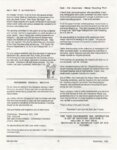
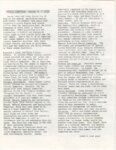
Show SOC I AL POLI CY Meeting Basic Human Needs With regard to health care, half the respondents said those people covered by medicaid can get reasonable care, but all said that health care for peopl e not covered by medicaid is a serious problem. If a person is covered by medicaid, health care received is not very different from patients who pay. However, if a person is not covered by medicaid, many respondents felt these people were more often refused emergency service by hospitals, had to use facilities farther from their homes, had to wait longer for appointments, and could not receive the full range of services available to patients able to pay. Major reasons given for lack of access to health care were: people are unemployed and do not qualify for medicaid and cannot afford to buy health insurance; they are over 65, are not poor enough to qualify for medicaid and cannot afford the co-payments and deductible required by medicare; and the high cost of health care. Despite the bleak picture painted by the above statements, most respondents indicated that health maintenance organizations have increased access to health care in Salt Lake, as have cost-containment policies by third party payers that have changed reimbursement policies to health care providers. Expanded governmen t sponsored insurance plans to cover the following were suggested: all persons not covered by employer-sponsored insurance plans; dental care; prenatal care; catastrophic illness; nursing care for elderly patients; and athome care for the chronically ill. The Salt Lake League conducted the first part of the human needs study last spring. We had a good committee and were able to complete nine interviews with human service workers, three hypothetical case studies and some background statistics. This article will review some of the results from our study. In terms of income inadequacy, the three major reasons given for this problem were mental illness, poor economic conditions, and the fact that women must often support families without help from fathers. Many interviewees believed that some people did not apply for income assistance because of red tape, not knowing programs exist, or where to apply. Most respondents also indicated that the demand for income assistance in Salt Lake County has increased in the last three years, primarily because of female headed households and deteriorating economic conditions. Many interviewees also indicated, however, that Salt Lake's ability to provide income assistance is somewhat better than three years ago. With regard to food, all respondents said that lack of food is either a very serious problem or somewhat of a problem. Food stamps, WIC supplemental food program, free or subsidized lunches and surplus cormnodity distribution are used by some people who need them. Reasons for not using food programs are that people don't know about the programs, don't realize they are eligible, or do not want to frequently document eligibility. Half the respondents did not believe Salt Lake had adequate resources to meet emergency requests for food. All but one interviewee stated that the problem of hunger has increased in the valley over the last three years. All respondents felt the private sector has some responsibility for funding food and housing programs. All but two interviewees believe access to health care is partially a private sector responsibility, and half believe income assistance is in part a private sector issue. For the hypothetical case studies conducted as part of the study, all three "clients" would find it difficult to get help in Salt Lake. They would have to make between 2-4 phone calls, visit an agency 3-4 times, fill out 2-4 forms, have 3-7 personal interviews, and wait 1-3 weeks before receiving help. Documentation and verification of information is required in all cases. The supply of public housing was deemed inadequate by most respondents, as were subsidized rent programs for low-income families. Lack of funds was stated as the reason for both these conditions. All respondents indicated there is a problem in Salt Lake with unsafe or unsanitary housing. Landlords not maintaining their rental property is a frequent problem, but many interviewees said that tenants do not maintain the property either. SaltL:t.keVoter Shery 1 Gillilan Social Policy Chair -4- November 1987 |