| OCR Text |
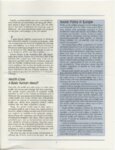
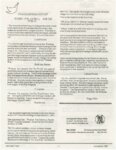
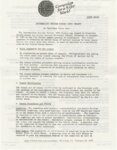
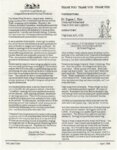
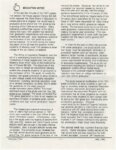
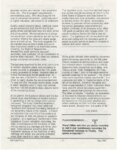
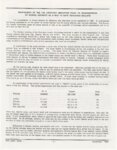
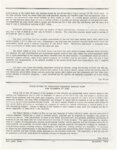
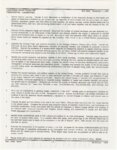
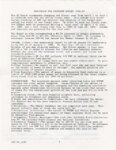
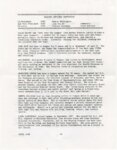
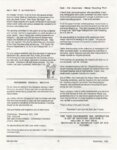
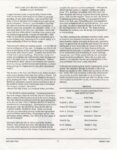
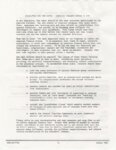
Show SALT LAKE CITY SCHOOL DISTRICT SEISMIC STUDY INITIATED except in the case of a severe earthquake. Although the district has had a policy in regards to earthquake safety since 1974, buildings remodeled since then have not been designed well enough to place them in the good category. t-fow can this happen? Since the Salt Lake district is a separate governmental entity, it is excluded from provisions of the Salt Lake City building code and inspections as to code compliance left are up to the district. As a separate entity, the district must pay the city to do that inspection so it has chosen not to do so. The State Building Board has no authority over the design and inspection of school buildings. League members have a long standing interest in the costs of education, particularly as it it relates to per pupil spending. (In last year's statistics, Utah moved from last place to next to last place in the nation in per pupil spending for education.) However, new information regarding the safety of students and staff during an earthquake is likely to cause new competition for education dollars. A recent study done for the Salt Lake City School District indicates that most of the district's buildings have serious seismic shortcomings and that it would cost from $30 to $50 million to remodel all school buildings to bring them up to current building code requirements for seismic safety for a major earthquake (7.5 on the Richter scale). There are other factors to consider as well. The city has not had an earthquake of this scale. Geologists say that we will have an earthquake of this maginitude but no one can predict exactly when this will occur. Students only spend 12% of their time in school buildings. Even if this money is invested, the buildings still might receive major damage and loss of life might occur in a serious earthquake. There is some question about liability of the distirct in this situation. Given our always constrained educational dollars, is remodeling buildings of a higher priority than other educational needs? The stiuation in the Salt Lake District is not unique as most other school districts in the state face similar problems. Salt Lake is the first district in the state to attempt to develop a policy dealing with them. The Salt Lake City School District Board has appointed a seismic safety committee to look at the problems and to recommend policy (ies) to the board. Two League members, Genevieve Atwood and Gigi Brandt, are members of the committee. Of the 38 district school buildings, 14 present problems in the worst category (high life hazards) and all of these have 68% or more of their total floor space in the worst category. The high schools as a block present the worst glaring problems: 65% of East, 71 % of Highland and 63% of West are· classified in the worst category. Estimated prices for retrofit are equally high: $3,426,250 for East, $1,936,450 for Highland and $2,122,938 for West. Some community members are advocating closing at least two high schools (East and West) and building a single super school. One .elementary school, Whittier, has 100% of its floor space in the worst category. Generally (although it is not true in part of the Bennion School), most schools built after 1980 do meet the building code, which represents MINIMUM standards and as such means that there is little chance of structural collapse Salt Lake Voter -3- The initial meeting of the committee revealed a wide variety of concerns and opinions from those who are worried about potential liability and safety to those who seemed to be of the opinion that no students were killed in the severe earthquake in 1934 so perhaps we need to do little. Genevieve Atwood, as head of the State Geological Survey, pointed out the necessity to consider other natural hazards in the construction and remodeling of school buildings. (Apparently, one hillside school build_ing has developed severe foundation problems.) Since this is a state wide problem, it is expected that the recommendations of this local committee may have a state wide effect. California has school building design requirements, enacted after the extensive damage to schools in the Long Beach earthquake of 1931, which have proven to be effective. In the 1971 San Fernando earthquake which provided a preview as to the destruction of an earthquake in a highly urbanized area, schools built after the design codes were in place survived with virtually no hazardous structural damage. -Gigi Brardt MANY THANKS TO OUR CONTRIBUTORS AND BENEFACTORS Katie L. Dixon M.M. Fidlar Eugene L. Bliss Robert P. Huefner Robert M. Archuleta Linda S. Pembroke Keith A. Cannon Dalmar H. Olsen Marina G. Martin Christine C. Durham Carol M. Fay Afton Bradshaw M. W. Wallace Dwight L. King Joanne C. Slotnik Carol Lois Clark October1989 |