| OCR Text |
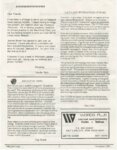
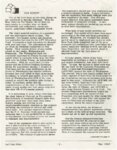
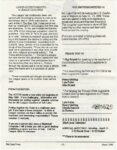
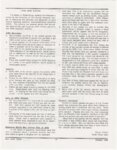
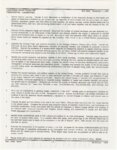
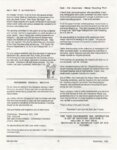
Show Export of Pesticid es U.S. export sales are one-quarter of the world pesticide market. Pesticides never registered for use or banned for use in this country may be exported for use elsewhere. Ostensibly, manufacture rs must follow EPA procedures requiring that purchasers and government s be informed of the regulatory status of the products being purchased. However, EPA has no system to monitor compliance and there are no procedures for ensuring that governments and importers are notified when a pesticide registration is canceled. EPA has ruled that pesticides that have never been agency does not consider these findings in decision making concerning pesticide registration. One of the most controversial aspects of FDCA and the setting of tolerances for pesticide residues relates to the Delaney Clause of FDCA. The Delaney Clause technically prohibits any presence of carcinogens in processed foods when the residues concentrate during processing. In other words, the Delaney Clause codified a health-based, zero-risk policy for carcinogens in processed foods. Yet a risk-benefit standard -- a different calculation altogether -- is in effect for raw agricultural commodities. As discussed above, risk-benefit analysis includes consideration of economic benefits as well as risks. While as of mid-1989 the Delaney Clause remains law, both FDA and EPA have developed interpretations of the legislative language of FIFRA and FDCA that enable them to circumvent the Delaney Clause and allow some uses of animal and human carcinogens that concentrate in processed food. However, many older pesticides are scheduled for re-registra- Salt Lake Voter registered in the U.S. but are similar in composition to registered pesticides are exempt from the notification requirements. EPA does not make sure that companies not following notification requirement s are, in fact, exporting pesticides similar in composition to registered products. Critics of these policies argue that notification gets lost in the paper shuffle and that we are exposing people in other countries to hazards we have determined to be unacceptable . Also. these pesticides may return to the U.S. as residues on imported food. • tion in the near future and it is expected that many will be found to be animal carcinogens. Without legislative change, EPA will find it increasingly difficult to avoid enforcing the Delaney Clause due to public outcry and legal action being taken by several public interest organizations. In the debate over what constitutes an "acceptable" level of risk, proponents of strict adherence to the Delaney Clause advocate a health-based, zero-risk standard. However, many of those active on this issue see that as unrealistic in the short run and argue for a health-based, "negligible" risk standard. A health-based standard would allow no consideratio n of economic benefits. Negligible risk is commonly, although arbitrarily, defined as that causing no more than a one in one million risk of causing cancer. FIFRA does contain provisions allowing EPA to cancel tolerances and demand withdrawal of a pesticide from the marketplace if, after registration, new evidence shows that it is dangerous. But procedures for doing so are lengthy and often involve protracted legal battles with -12- March 1990 |