| OCR Text |
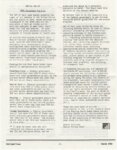
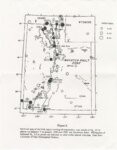
Show 8 Background Inform ation- More on Utah's Earthquake Threat Seismologists, geologists, and engineers have reached a fundamental consensus about technical details of the earthquake threat in U~w here, how big, how often, and what's going to happen. That consensus, arrived at as pan of a special five-year focus (19831988) on the Wasatch Front region under the National Earthquake Hazards Reduct ion Program, is articulated in a draft document included here as Attachment No. 3 (see Part 3, in particular, for technical details). Scientific perspectives from observational seismo logy and paleoseismology (the geological study of the age, frequency, and size of prehist oric earthquakes) are amplified in Attachment Nos. 4 and 5, respectively. Here are some relevant highlights: Source and Frequency of Earthquakes • Utah is transected by the Intermountain seismic belt (Fig. 5)--characterized by diffuse shallow seismicity, Holocene normal faulting, and high seismic risk associa ted ~th episodic surface-faulting earthquakes of magnitude 6.5 to 7.5+. • Since 1850, at least 16 independent earthquakes (aftershocks excluded) of magnit ude •6.0 or greater have occurred within the Intermountain seismic belt (Fig. 5). Three of these historical earthquakes were associated with documented surface faulting: (1) the magnitude 6.6 Hansel Valley,_Utah, earthquake of 1934, (2) the magnitude 7 .5 Hebgen Lake, Montana, earthquake of 1959, and (3) the magnitude 7.3 Borah Peak, Idaho, eanhquak.e of 1983. • The greatest threat for large surface-faulting earthquakes in the Utah region is posed by the 370-km-long Wasatch (ault zone (Figs. 5 and 6)-des pite the fact that it has not generated any earthquakes larger than magnitude 5 in historical time. (Large surface-faulting earthquakes can also occur on numerous other known active faults in Utah showing evidence of prehistoric surface rupture. In general, those other faults tend to have longer recurrence intervals for surface rupture.) • The Wasatch fault is made up of as many as 12 independent fault-rupture segmen ts (Fig. 6). Segments along the central two-thirds of the fault from Brigham City to Nephi have each ruptured two or more times in the past 6,000 years (Fig. 7). • Geologic trenching and dating •studies indicate that the pattern of timing of large surface-faulting earthquakes on the Wasatch fault during the past 6,000 years is complicated (Fig. 7). For the segments between Brigham City and Nephi, the compo site recurrence interv al-the average time between two faulting events anywhere on this |