| OCR Text |
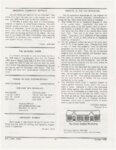
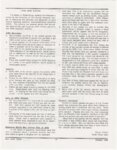
Show WHO IS RESPONSIBLE FOR JPrA IN SALT LAKE COUNI'Y? The Governor has the responsibility for coordinating state and local JPI'A programs. A 16 merrber Job Training Coordinating Council (JTCC) representing business, corranunity, labor, local and state governrnent,and public and higher education advises him. The Office of Job Training for Economic Developnent, in the Department of Corranunity and Economic Developnent, has the responbility of coordinating programs with economic developnent plans, monitoring and evaluating local programs, and providing technical assistance. The state is divided into nine Service Delivery Areas (SDAs)to administer the programs. In each SDA, Private Industry Councils (PICS) chosen by elected officials and local officials share the responsibility for overall policy, planing and oversight of the program. They also decide what job training programs to fund. By law, PICS must have a business membership majority. Other PIC members represent education, labor, rehabilitation agencies, corranunity-based organizations, economic developnent agencies and Job Service. The SDA for the Salt Lake area includes Salt Lake and Tooele counties. The Salt Lake-Tooele PIC consists of 25 merrbers, including representatives from Job Service, public and higher education, small and large business, labor and corrmunity-based organizations. Seven of the 25 members are women. Kay Berger Arnold, a local realator, is the current chairperson. The annual budget is over $5 million. Currently, job training contracts are awarded to 14 subcontractors including the Asian Association of Utah, Career Guidance, Columbus Corrn1unity Center, Homebuilders Association, Job Service, the Phoenix Institute, Salt Lake County Aging Services, Salt Lake Skills Center, South Valley Enterprises (Jordan School District), Special Vocational Services, The Search Firm, UOIC (a national comnunity based organization, and the roofers union. One agency, the Phoenix Institute, deals only with women's programs. HCM ARE WOMEN BENEFITrI!'K; FROM JPrA? Women attempting to enter the job market may face special problems including overcoming the clustering in the worforce in the lowest-paying and most non-technical jobs, discriminatory attitudes on the part of employers and need for adequate support services. In the national League publication, "Women in Job Training," attention was focused on the implementation of JPrA as it concerned women. Gathering data from twelve SDA's across the nation, the League concluded that in spite of high female enrollments and the availability of some nontraditional training, women were still not moving into higher-paying nontraditional jobs. Some of the problems they found were: ineligibility for participation in JPI'A programs under Department of Labor standards; lack of female representation on PICS, lack of adequate money for support services; and the low level of wages paid to JPI'A trainees at placement. The JPrA plan requirment that applicants to be able to perform at the eighth-grade level to be eligible for non-traditional jobs may hinder women. Nationally, most disadvantaged women perform at a fifth or sixth grade level. Because few or no funds are available for remedial education, opportunities to participate in training for higher paying jobs -2- |