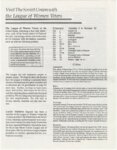
| OCR Text |
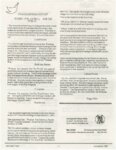
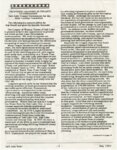
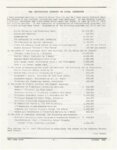
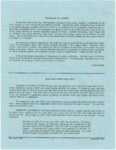
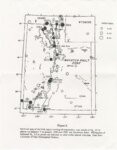
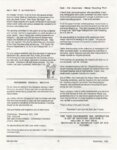
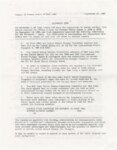
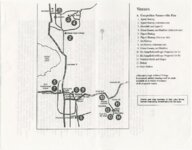
Show ..h Selection of Salt Lake City as "America's Choice" The U.S. Olympic Committee (USOC) has designated Salt Lake as their choice for the 1998 . winter games, or for the 2002 games if the Internationa l Olympic Committee (IOC) selects another country for 1998. The IOC will make its choice in June of 1991 between Salt Lake City, Oestersund (Sweden), Jaca (Spain), Aosta (Italy), Nagano (Japan), Sochi (USSR), and possibly Queenstown (New Zealand) . Recent IOC game site choices have been at Sapporo, Japan in 1976, Lake Placid, New York (1980), Sarajevo, Yugoslavia (1984), Calgary, Canada (1988), Albertville, France (1992) and Lillehammer , Norway (1994). Past choices indicate that the IOC has aimed for some geographica l balance over the long term. This encourages proponents to believe that because 1992 and 1994 games will be in Europe, Nagano and Salt Lake City would be the most likely 1998 candidates. Some critics of the Salt Lake bid suspect that it is likely to be Japan's turn. Proponents believe that Salt Lake compares favorably with Nagano, where game events would be 4 hours from an airport and farther from the city than in Salt Lake, television rights would yield less income, and prices are generally higher. However, should Japan be chosen for geopolitical reasons in 1998, Salt Lake City would again be supported by the USOC in 2002. This support through two attempts also applied to Anchorage in the past. It is offered partly in exchange for Salt Lake's willingness to invest in initial facility constructio n by early 1991, before the internationa l committee has made its choice. Required Initial Facility Constructio n The enclosed map from the Salt Lake Winter Games Organizing Committee's (SLWGOC) bid book shows proposed venues for winter games events. These locations were accepted by USOC. Any changes would have to be reviewed and approved by both the Salt Lake and U.S. organizing committees. The USOC decision in favor of Salt Lake City was contingent on beginning construction of new facilities--a new ski jump, bobsled/lug e run, and speed skating oval--by January, 1991. As the map shows, their general location is known, but exact choices between alternatives have not been made. Actual costs will depend on costs of land acquisition, excavation and possibly other variables not known until exact sites are selected and purchased. The current estimated cost of these facilities, including land, construction , utilities, access and parking, is $40 million. They will be funded by tax dollars. Besides these new facilities, capital improvemen ts to existing game venues will require another $70 million. This upgrading will be funded by private dollars and would begin in 1996, after selection of Salt Lake as the 1998 site is secure. The USOC decided to require initial facilities early in the bidding process to improve U.S. competitive ness. Having them in place would of course be an advantage when the IOC makes its decision. But the USOC also plans to improve the performance of American athletes by using the facilities for training before and after the games. Currently the only U.S. winter sports training center is at Lake Placid, which is difficult to reach and has outdated facilities. Funding of Initial Facilities h Sales Tax The 1989 legislature passed H.B. 37 4 to finance the new facilities requested by USOC. This law allowed creation of the Utah Sports Authority and enabled the |