| OCR Text |
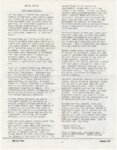
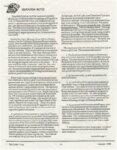
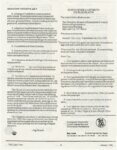
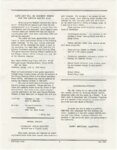
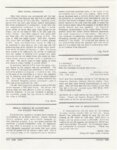
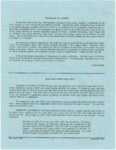
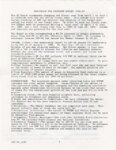
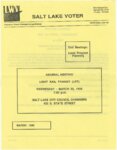
Show 0 CHOICE IN PUBLIC EDUCATION One of the most frequently mentioned options in public education reform is the adoption of a voucher system. where parents would be provided a payment for education which they could expend in public or private schools. The element of competition among public schools, according to its proponents. would cause schools to become better to attract students. A variation of this is" open enrollment," where students are allowed to enroll at any school in a school district regardless of their address. Salt Lake public high schools had a policy of open enrollment until 1984; in an attempt to "save South High School and keep the enrollment at Highland stable the districtfroze the boundaries. Some Republicanlegislators have been intrigued withtheideaofintroducingcompetitioninto the public schools and a bill to allow open enrollment was defeated this session. West High School advocates were persuasive in their lobbying efforts for def eat, callingopenenrollment elitist and successfully stirring up westside vs east.side" emotions. However, open enrollment is just one aspect of choice in public education March Utah Education Seminar speaker, Dr. Richard F. Elmore of Michigan State University, pointed out. Demand for more choices, both by parents and by teaching professionals, is going to increase rather than decrease in the future he predicted. Interestingly, henoted thatsupportformore choice comes from both conservative and liberal politicians. Two important questions remain in the discussion of choice in public education. This first is quality control or enhancement. The second is what to do with the "inactive chooser", that parent or provider who does not become involved in the offered choices. Dr. Elmore noted that a system of open enrollment is not elitist--indeed, if done correctly, it provides enough variety within the system so that needs of a variety of parents and students can be met. The study of open enrollment has been put on the interim committee agenda--we can be certain the issue is not dead 11 11 - Gigi Brandt WELCOME NEW MEMBERS 11 11 There are a variety of ways to introduce choice into public education thatfall short of vouchers. These include modifications to one or more of the elements of finance, attendance and staffing, and cum cul um -including lump sum allocations to schools, outside contracting for services, magnet schools, and school determined curriculum. Although most of the attention to choices in education has focused on the demand side, e.g. parents, Dr. Elmore pointed out that more choices are also being demanded on the supply side, the side of educational professionals. Education in the next century will be different because basic research today is revealing new dimensions in how people learn so that it will be possible to truly individualize learning. The education profession will have to model itself so thatitcan compete effectively with other professions. This means that teachers will demand a largerrole for themselves in any setting, whatever parental demands. As expected, many administrators in districtofficeshavereal difficulities relinquishing control to parents or teachers. Dr. Colleen Colton, Governor Bangerter's special assistantfor public education, noted in her comments that most administrators over45 are authority oriented and find it hard to deal with questioning parents and teachers. SaltLake Voter Jill Armour 2981 S. Plateau Dr. SLC, UT 84109 H. 485-4554 W. 373-6301 Alice Burton 1264 Cutler Rd. SLC, UT 84106 W. 263-2305 Sherylynne Harris 1826 Logan Ave. SLC, UT 84108 H. 467-9606 W. 581-5705 Virginia Parmalee 1307 4th Ave. SLC, UT 84103 359-9680 Laura Poe 484 E. 6360 So. Murray, UT 84107 H. 262-6589 H. 266-1466 W. 350-4700 WELCOMEBACK.! Barbara Kuehl 1394 Michigan Ave. SLC, UT 84108 -6- H. 582-6890 W. 322-0431 April 1988 |