| OCR Text |
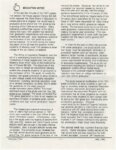
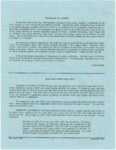
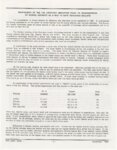
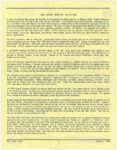
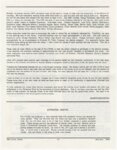
Show The timeframe and procedures for re-registration have been extended repeatedly as EPA has been slow to demand data and conduct evaluations. According to the Government Accounting Office (GAO), as of 1986, 124 "old" active ingredients had undergone preliminary reassessment but none had been completely reassessed. The pace of data submission and review was so slow that it was estimated it would be well into the 21st century before re-registration was complete. The 1988 FIFRA amendments accelerate this process so that re-registration ought to be complete by the year 2000. Registrants will be assessed a fee to help cover the costs of evaluating the data they submit. Thus, new pesticides are subject to the latest data submission requirements and must be evaluated with the latest scientific techniques. However, old, previously registered pesticides that have not yet undergone re-registration and that may not pass current safety tests are still legal for use. Setting Tolerance s and Assessing Risk Pesticides cannot be registered for use on food crops until tolerances (maximum allowable residues) are determined for food crop uses of the pesticide, based on data submitted by the registrant. The authority for setting and monitoring tolerances is established in the Food, Drug and Cosmetic Act of 1954 (FDCA) and subsequent amendments. Pesticide residues are considered a food additive under FDCA. Authority for setting tolerances was transferred from the FDA to EPA in 1970, but enforcement authority remains with FDA. A pesticide may have a tolerance for each raw commodity on which it may be used, others for processed foods and still others for animal feed. The _setting of tolerances is among the most controversial aspects of pesticide regulation. Salt Lake Voter Central to the EP A's tolerance setting actions are determinations of risk. Risk assessment is at the heart of the current debate over food safety and is also the area where the public's lack of knowledge and involvement are most apparent. How much risk are we willing to accept? Much of the current debate over food safety centers on this question. At present, consumers have no choice but to accept the risk posed by chemicals used in food production and the resulting residue.s found in food and water. FIFRA requires that EPA evaluate the health and environmental effects of a pesticide when reviewing a registration application. EPA believes the legislative language· of FIFRA and FDCA allow for the consideration of benefits as well a_s risks when evaluating a pesticide, but there are no strict guidelines as to how much risk is too much or how benefits should be measured. EPA considers a risk of one additional cancer per one million population as insignificant. In addition, if EPA considers benefits, it may consider risk up to the level of one additional cancer per 100,000 people over a lifetime of exposure as acceptable. EPA considers the economic·benefits to farmers but generally does not weigh them against alternative pest control strategies. Critics of current policy view EPA's determination of "acceptable risk" as too lenient and oppose the consideration of economic benefits in the tolerance setting process. In considering the health and environmental effects, EPA considers only the active ingredients in a pesticide. It does not evaluate the inert ingredients -- those used to dilute and deliver the active ingredient -- even though these ingredients can be potentially harmful. In a preliminary survey of 1,200 inert ingredients, EPA found 55 of known toxicity, 51 of similar molecular structure to those of known toxicity, 900 of unknown toxicity and 200 generally recognized as safe. But at this time the -11 - March 1990 |