| OCR Text |
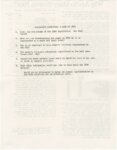
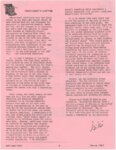
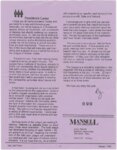
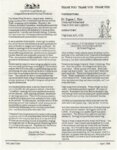
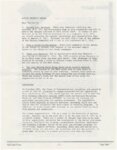
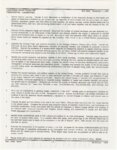
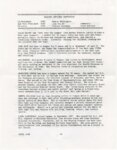
Show submitted the above as a consensus statement to LWVUS. The Board made this decision at its January meeting. SOC I AL POLI CY MBHN Consensus Position We believe that it is the responsibility of the federal government to set minimum standards and/or guidelines for assistance programs. The LWV of Salt Lake County supports the right of all persons in the United States who are unable to work, whose earnings are inadequate or for whom jobs are not available to have an income and/or services adequate to meet their basic needs for food and shelter. We also believe the above statement should be expanded to include access to health care. LWV of Salt Lake County believes the following methods should be used to reduce poverty: increasing job opportunities; expanding coverage of the minimum wage; providing access to health insurance, i.e., expanding subsidized health care, creating risk pools for the employed insured, etc.; providing support services, i.e., child care, transportation or subsidized health care; providing opportunities and/or incentives for basic or remedial education and/or job training; requiring income assistance recipients to work, attend school or participate in job training programs in exchange for benefits; providing programs designed to decrease teen pregnancy; and enforcing child-support laws. We believe that access to health care should include: preventive care; primary care; maternal and child health care; emergency care; catastrophic care; nursing-home care; nutrition programs; substance-abuse programs; health education programs; sex education programs and mental health care. We do not believe access to basic health care should include experimental "high-tech" procedures such as artificial heart transplants. Funding for the four basic human needs should be appropriated as follows:** If mandatory obligations are imposed on recipients of assistance, such a policy should include the following: exemptions for primary care givers (i.e., persons caring for young children, the elderly or the disabled); equitable compensation (not below existing wages for similar work}; disregard of some earned income for the purpose of calculating benefit levels; job training; basic education; the promotion of self-sufficiency, the goal of which is becoming independent of the welfare system in a reasonable amount of time; and the retention of supplemental support services (i.e., health care, subsidized child care, etc.). Food/nutrition -- Federal government should fund more than 50j of these costs; state and local governments as well as the private sector should each pay less than 50% but should share responsibility. Health Care -- Federal government should fund more than 50j of these costs; state and local governments as well as the private sector should each pay less than soi but should share responsibility. Housing Federal government should fund more than 50% of these costs; state and local governments as well as the private sector should each pay less than 50j but should share responsibility. Thank you very much to all who participated in the initial research phase of the Meeting Basic Human Needs project. And many thanks to all who attended unit meetings to discuss consensus questions. This is the conclusion of National's two year study on this topic. Income Assistance -- Federal government should fund more than 50% of these costs; state and local governments should share the remainder of the costs. The private sector should not have any responsibility in this area. Sheryl Gillilan Social Policy Chair ** It must be noted that one unit indicated the federal government should pay for all the above costs, but we Salt Lake Voter -4 - I __, I _ , 11 MI I I March 1988 |