| OCR Text |
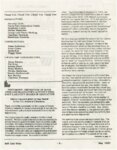
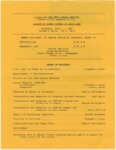
Show and children under age five who live in families with incomes up to the poverty guidelines. Housing problems are complex and the solutions are not simple. Thanks for attending your Unit meetings and addressing these issues. If any of you have additional comments or questions about housing, I would appreciate hearing from you. In an average month in 1986, only 31.7 percent of the unemployed in Utah received unemployment insurance benefits. This figure is down from 1979 when 43.8 percent of the unemployed in Utah received unemployment benefits in an average month. The states, subject to broad federal standards, have wide latitude in establishing eligibility and payment standards for these benefits. • Laura Landikusic 596-7183 SAVING THE WORLD CONFERENCE While Utah recently raised the level of income at which the poor must begin paying income taxes, the state still taxes food and does not provide any kind of a sales tax credit. A public conference concerning worldwide rain forest destruction and ozone layer problems is scheduled for April 15th at the Doubletree Hotel in downtown Salt Lake City. (Please note change in location of the conference from that listed in the March issue of THE UTAH VOTER.) "Saving the World" is the name Chairman Frances Farley chose for the event, which is sponsored by the Utah Federation of Democratic Women. Senator Farley says, "Last winter, in frustration over the lack of concern for protection of the Utah environment that I saw during one of the special sessions at the Legislature, I began thinking about possible ways to change attitudes in our state. Taking the issue to a larger stage seems like a good idea. Also, numbers of people I meet seem really interested in learning more about global environmental changes. I believe this is the first Utah conference on the subject." The conference begins at 10:30 a.m. and concludes at 2:00 p.m. on Saturday, April 15, at the Doubletree Hotel, 215 West South Temple, Salt Lake City. The fee for the conference, which includes the luncheon and Dr. Diane Davidson's keynote speech, is $18. Reservations may be called in to Helen James at 968-1388 or to Frances Farley at 364-2405, or mailed to Farley at 1418 Federal Way, Salt Lake City, 84102. Dr. Diane Davidson is Professor of Biology at the University of Utah and has recently returned from months of scientific investigation in the rain forests of Peru. She is a 1987 Guggenheim Fellow and National Geographic Research Expedition Grant recipient. Her rain forest investigations have taken her to Brazil, Australia, New Guinea, Malaysia and Borneo. En route back from a recent trip, Dr. Davidson stopped at Oxford University to present a seminar to the Department of Botany and Zoology. F. Burnell Cordner, Director of the Bureau of Air quality for the State of Utah, will provide information in a presentation on the ozone layer and will also report on progress toward improved air quality in Utah. Although Utah does provide many benefits to the state's poor, significant holes in the safety net remain. Sheryl Gillilan Social Policy Chair SALT LAKE CITY HOUSING CRISIS REPORT Twelve League members attended the briefing on the study, "The Housing Crisis: National and Local Perspectives," which was led by Carl Inoway. Several interested persons from the community also took part. Judging from the Scribes' reports, there were some lively discussions in the Units about the report. There was consensus on one question only, that landlord/ tenant laws are needed (question 7). The means to answer this need, as well as determining program priorities (question 8), and the importance of community development corporations (question 9) were not uniform enough to create a consensus. Two questions were raised in the Scribes' reports. One was a hope that the Fair Housing Bill passed by the legislature would solve landlord/tenant problems. Unfortunately, it does not since it only deals with discrimination and enables citizens to settle discrimination matters in Utah without having to refer them to Denver. The other question was why the HUD-approved, subsidized rental rates are higher than the private market rental rates. The fair market rates set by HUD are "sticky" and have not dropped to match the lower rental rates in the Salt Lake area in the last few years. Validity of fair market rents across the country is probably an issue which needs better attention from the federal government. Salt Lake Voter -6- Aprll 1989 |