| OCR Text |
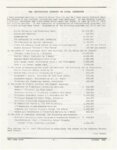
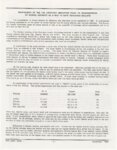
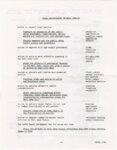
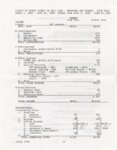
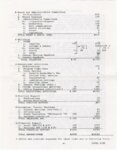
Show Authority to receive sales tax revenue to make bond payments and operate these facilities. The sales tax revenue is to be 1/64 of 1 percent from the general fund and 1/64 of 1 percent from the local option sales tax which would have otherwise reverted back to cities and towns when no longer needed for flood control and desert pumps. The annual revenue received by the authority is expected to be $4 million in 1990, increasing to $5 million by 1995 and $6 million by 1998. Approximately $55-56 million should be generated over the next 10 years for construction and maintenance. The sales tax redirection is described by Olympic proponents as amounting to $25 per Utahn over the ten years. The Utah Sports Authority is expected to use zero coupon bonds for construction so that no bond payments will be due -until 1995, allowing time for sales tax revenues to accumulate and construction to be completed without bond payments. Bond payments would continue from 1995 through 2010. If the games do not come to Utah in 1998, but come in a later year, the sports authority is expected to fund operations and maintenance until then. Once the games are held here, a facility endowment will be created using games revenues, and the collection of taxes for facility operation and maintenance will be discontinued. At a special session of the legislature on September 19, the state sports authority was created, to be composed of 15 private-sector representatives appointed by the governor and nominated by Salt Lake City officials and statewide government entities, such as the Utah League of Cities and Towns and the Utah Association of Counties. The sports authority will oversee the SLWGOC budget and expenditures and arrange for the $56 million in sales tax revenue to be repaid to the state by the SLWGOC. Public vs. Private Funding. There has been considerable opposition not to the games themselves but to the notion of public funding. Some critics have noted that the 1984 Los Angeles summer games were successfully financed entirely by private money. Utah Olympics proponents point out that Salt Lake has much less access to private capital than Los Angeles and needs to raise money quickly to construct the initial facilities. They also stress the appropriatenes s of public funding for facilities which will be used not only for the games but to make winter sports training: accessible to youth throughout Utah and attract athletes to our universities as well as to training facilities. Public funding for the 1988 Calgary games was offered without expectation of repayment. Federal funding in Canada came from the sale of Olympic coins and stamps and from a lottery. The Province of Alberta's contribution came from their Heritage Trust Fund, consisting entirely of taxes on oil revenues. Another criticism is that other Olympic cities, such as Montreal, have been saddled with debt from unproductive facilities. Organizers believe that times have changed on this score. Both the Los Angeles and Calgary games earned surpluses. An important change is escalating revenue from foreign and domestic television/radio rights, from $6.4 million in 1972, to $91.5 million in Sarajevo (1984) to $309 million last year in Calgary. Despite disappointing ratings for the 1988 Seoul summer games, Lillehammer, Norway last month contracted to receive $300 million for U.S rights (estimated total nearly $400 million) to the 1994 winter games. Events held in prime time in North America generally draw the most lucrative media contracts because of the large audience they reach. Also, these funds usually begin to be available as soon as the contracts are signed, about five years before the games occur. Television would account for over half of private SLWGOC proposed revenues, allowing a $50 million surplus allocated in part to a $20 million "facilities endowment" for maintenance of facilities after the games. |