| OCR Text |
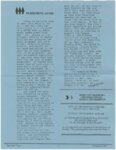
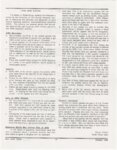
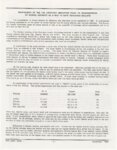
Show themums). The majority of the pesticides used today, however, are synthetic organic compounds primarily developed as a result of World War II research on biological warfare and disease control. There are 600 active pesticide ingredients registered for use with the Environmental Protection Agency (EPA) , with approximate ly half of these legally allowable for use on food. Newer pesticides are being developed that manufacturers claim are highly potent but less persistent -- that is, not as longlasting. Less of these substances should be needed to control pests, resulting in decreased residues in food and water. Nonpersisten t pesticides break .down easily and are thus thought to be safer, providing that their breakdown products are not harmful themselves. However, the safety and effectiveness of most of these .new substances and their breakdown products have yet to be proven. What we are generally faced with for chemical pest control is a trade-off between highly toxic but nonpersisten t pesticides versus less toxic but more persistent ones. Even though agricultural pesticide use tripled between 1965 and 1985, crop losses due to pests are still a problem. This is primarily due to increasing pest resistance, although weather, cropping patterns and farm technology also have played a part. Today, nearly 500 insects and 50 weeds are resistant to pesticides. Since pests adapt easily to changes in their environment, they quickly become resistant to pesticides -- not only to single compounds but also to whole classes of pesticides. This is particularly the case for insecticides. Broad-scale insecticides -- those able to kill a range of insects rather than just a selected pest -- contribute substantially to tltis problem. Broad-scale pesticides also eliminate beneficial (predatory) insects, which can result in new pest outbreaks. Farmers dependent on chemical control of pests often apply pesticides routinely and at levels calculated to eliminate pests entirely. Critics suggest that pest levels should be monitored and pesticides applied only when the pest level reaches a threshold where actual economic losses would warrant treatment. They say that control, not elimination, of pests should be the goal. Biological and cultural controls can be used to work in conjunction with nature to keep losses to pests at a minimum. Integrated pest managemen t (IPM), using biological and cultural controls as much as possible but using limited chemical controls when absolutely necessary, can cut pesticide use substantially. There are no strict definitions of IPM, however; so-called IPM practices can vary dramatically and may involve substantial use of pesticides. On another front. recent advances in genetic engineering show promise for the development of new, safer pesticides relying on genetically altered organisms. Some people may class these techniques as biological controls since they involve using living organisms. Plants, for example, can be genetically altered to produce substances toxic to weeds and insects. Bacteria can be similarly altered and inserted into .plants or soil. Care must be taken, however, to avoid unforeseen side effects, which have resulted from scientific "breakthroughs" in the past. Although such biotechnology holds promise, there are those who suggest we need to debate the social, economic, environment al and ethical questions involved before continuing research and implementation. doubt that pesticides have made no There is important contributions to society. We have grown to depend on them to control insect-borne disease and to sustain periods of high production of food. But the benefits of pesticide use should be juxtaposed with the associated risks and evaluated against possible alternatives. I Salt Lake Voter 'J -6- November 1989 |