| OCR Text |
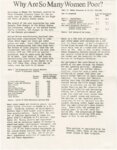
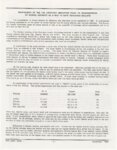
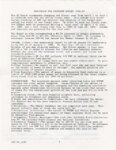
Show effects. These are the feminization of poverty, rising welfare costs, and loss of respect for the legal system. The Feminization of Poverty A growing number of single mothers are heading their own households. Because the probability that a woman will become a widow has not changed substantially, the increase in female-headed households can be attributed directly to the rising divorce and out-of-wedlock birth rates. This situation is economically as well as sociologically significant because the absence of a parent usually means a lower standard of living for the family. In 1983, the poverty rate for the nation, determined on an income-per-family basis, was 15.2 percent. The rate was 40 percent for single-parent families headed by white women and 75 percent for those headed by black women. The composite poverty rate for all families headed by females with no husband present was more than three times that for married-couple families. Women, left alone to care for their children; frequently cannot cope adequately by themselves. It is difficult both to care for children and work. Those who do work usually cannot command a sufficient salary to meet the needs of their families. Without financial support from absent fathers, many mothers are forced to seek public assistance. Increasing Welfare Expenditures The magnitude of the child support problem in the United States was difficult to analyze until recently because there was little data on the subject. However, it has become clear that the number of families receiving AFDC has a direct relationship to the problem of nonsupport. Figures on the AFDC program show a steady increase in both AFDC recipients and associated costs. Since the beginning of the program, there has been a gradual upward trend in AFDC caseloads. The costs of these increases have continued to be enormous. For example, between calendar years 1960 and 1983, the cost of AFDC money payments increased from $1.0 billion to $13.8 billion. Investigation of this dramatic increase in the AFDC rolls shows a drastic change in the nature of the AFDC recipients nationwide since the program began in 1935. Initially, death of the father was the main basis for eligibility. Since World War II, the reason increasingly has become the absence of the father from the home. Loss of Confidence in the Legal System As divorce and out-of-wedlock birth rates have risen, many individuals who have never been exposed to the legal system have become involved in divorce proceedings and paternity suits. These parents' sole experience with the legal system has been to witness its difficulty in resolving these disputes and its inability to enforce a resolution once entered. These insufficiencies have caused a significant proportion of the populace to lose confidence in and even respect for the legal system. -3- |