| OCR Text |
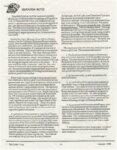
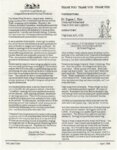
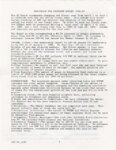
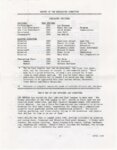
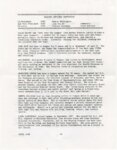
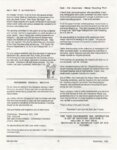
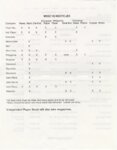
Show MS. READERS SPEAK OUT! "Reproductive freedom and abortion rights" ranked among the top concerns for 37.2 percent of respondents, the one issue of the recognized core feminist agenda that rated in the top five overall in this poll. Abortion, like the Equal Rights Amendment, is symbolic of women's desire for self-determination; the right to abortion is endangered today, and it is a visceral issue for women, which is probably why it's among the five most critical issues for Ms. readers. The next five concerns include other breadand-butter issues for women: "controlling the federal deficit," "the Equal Rights Amendment," "health care," and civil rights and affirmative action enforcement." Each has been chosen as among the top five by more than 20 percent of respondents, indicating a strong commitment to these concerns. They ranked above issues that have more attention in the media as the most critical problems facing the national today, such as "illegal drugs" (chosen as a top issue by 19.5 percent) or "AIDS" (a top issue for 17.8 percent). Another economic concern, "pay equity," was chosen as a top issue by 18 percent, and 14.4 percent ranked appointing more women to office among the top five. It is surprising that child care was not ranked as high as abortion, since it has certainly had attention in the media as perhaps the key issue for women in the 1988 Presidential campaign. Klein suggests that Ms. readers may be suspicious of the packaging of child care by the campaigns as a "family issue" that is somehow divorced from women's needs. Fewer than 10 percent chose the following as top issues: "adequate funding for Social Security" (9.6 percent), "domestic violence" (8.2 percent), "ending the conflict in Latin America" (8 percent), "safe streets" 6.8 percent), "ending the conflict in the Middle East" (4.4 percent), and "ending the conflict in South Africa" (3.3 percent). How do Ms. readers compare to women nationally? Consistently this year, from the beginning of the primary season in February through June, women have favored Michael Dukakis over George Bush by considerable margins while men have been more evenly divided. Even in the national poll that showed the best results for Bush overall--a Lou Harris poll in early summer in which he trailed Dukakis by 44 percent to 49 percent--the difference between women and men voters was still enormous. Among men, Bush led by 5 percentage points, while among women, Dukakis led by 14 percentage points, a spread of 19 points. A similar spread turned up in the NBC/Wall Street Journal poll of mid-June. That poll had Dukakis winning overall by 49 percent to Ed, ote: The following is a reprint of an article which appears in the August issue of MS. Magazine. If 1980 is any guide, the nation's agenda for years to come can truly be established during a Presidential election. This year, we asked Ms. readers to participate not only through their voting power but a1so by ranking the issues that they thought most critical to the nation. The results show that in this year when 10,000,000 more women than men will be eligible to go to the polls, the Ms. readers' vote will go to the candidate who best convinces us that he can insure the e'conomic security of women and children. Ethel Klein, a Columbia University political scientist, and other polling experts believe that the economic vulnerability of women as a group is behind the current gender gap, in which women tend more than men to support Michael Dukakis over George Bush. Considering the Ms. poll results, she thinks the same concern is there, even though Ms. readers on the average are relatively secure financially. "In the Reagan years, we fell into the trap of thinking that people see things strictly in accord with their own se,ff-interest," says Klein. "But people want to shift priorities." For Ms. readers, that means that global issues--1hose affecting the "safety net" for people on the edge of poverty and national security defined in domestic terms--are the concerns that lead the political agenda. Asked to rank in order the top five issues in this campaign out of 20 listed, only two issues were chosen by 50 percent or more of Ms. readers: "poverty, hunger, and homelessness," which fs among the top five issues for 63.1 percent; and "reducing military spending and end the arms race," among the top five 59.1 percent. "It's a comment on what Ms. readers see as the precarious state of the world and it's an expression of values," suggests Ethel Klein. She also points out that the safety net issues disproportionately affect women. The next two issues in order of importance-"education," chosen among the top five by 46 percent, and "preserving a safe environment," chosen by 39.9 percent--are also survival issues. Both education and the environment can be seen as symbolic of the American Dream , something we believe is everybody's birthright and important for the future of the nation. Education, too, may be a code word for social programs--a symbol of longing for social progress and essential as we ll if the United States is to be competitive in the futu re. Salt Lake Voter -5- July 1988 |