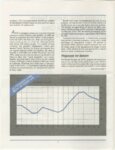
| OCR Text |
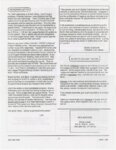
Show Meeting Basic Human Needs: A Crisis of Responsibility Most of us take for granted that the American dream includes-at a minimum-food, shelter, medical care and an income sufficient to purchase these necessities. But what happens to that dream if you never finished school, or the father of your children can't or won't pay child support, or the only job you can find pays the minimum wage, or you can't afford child care or health care, or the factory where you worked for 15 years shut down and you can't find another job? T hese are the dilemmas that face more than 13.6 percent of America's population-those living in or near the fringes of poverty. And their unanswered questions raise broader ones for our society at large. Where can people tum when their own resources fail them? Where does the responsibility lie for helping those in need? With the federal government? With state and local governments? With the individual alone? With religious and charitable organizations? While politicians grapple with the politically charged questions of whom to help, and what and how much assistance to provide, 32.4 million people-11 million of them childrenstruggle to meet their basic needs. Why is the problem of unmet need so great? Shifts in the economy, including lost jobs in manufacturing and farming, are part of the problem. Dramatic social upheaval, resulting in the world's highest divorce rate and sharp increases in single-parent families, also contributes to the problem. So do changes in federal spending priorities that have meant tremendous cuts in social programs since 1981. Although the federal ''safety net'' of income assistance, housing, food and health care remains, programs do not reach all of those having difficulty in meeting their basic needs, nor do they offer enough assistance to lift people out of poverty. The League of Women Voters is examing four aspects of this crisis in meeting basic human needs-income assistance, food, housing and access to health care. This report outlines who needs help, and what kind of help is available and presents some of the current proposals for restructuring the existing. social welfare system. © 1987 League of Women Voters Education Fund. Income: Inadequate to Meet Basic Needs A growing number of Americans are having difficulty earning enough to support themselves and their families. Despite the longest sustained period of economic growth in 20 years, seven million more people live in poverty today than eight years ago. Those in trouble include: • more than eight million Americans who are counted among the officially unemployed, another 5.6 million people involuntarily working part-time, and 1.1. million ''discouraged'' workers who have stopped looking for work because job prospects are too bleak. • 6.7 million workers who are paid the minimum wage of $3.35 per hour or less and whose annual incomes no longer keep their families above the official poverty threshold. An additional 11.5 million workers who earn between $3.35 and $4.50 per hour hover near poverty. Of the minimum wage workers, two-thirds are women and 31 percent are teenagers. W omen and minorities are disproportionately represented among the poor. Thirty-four percent of femaleheaded households, compared with 11.4 percent of maleheaded households, have incomes below the poverty level. In 1986 female-headed families accounted for more than one-half of all impoverished families. And while the poverty rate for whites hovers near 11 percent, the rate is 31 percent for blacks and Tl percent for Hispanics. Income Assistance Programs Three federal programs currently provide the bulk of income assistance to those in need: Aid to Families with Dependent Children (AFDC), Supplemental Security Income (SSI) and Unemployment Insurance (UI). AFDC and SSI are means-tested programs-that is, recipients must have no or very low income to qualify for |