| OCR Text |
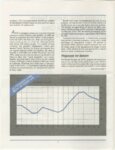
Show -- DROPOUTS; A. UTAH PROBLEVt w.QV~tyforpedoanancemtherthMprovisi.onof neededserYtces, Students who fail to finish high school mean serious social and economic costs to the nation. During the past 25 years. the national dropout rate has been at or above 25 percent. The Appalachian Regional Commission e.-i mares that dropouts for one year will earn $237 billion less overt.heir lifetimes than.high school graduates. As a result $71 billion less in .national. state and local taxes will be collected. Dropouts have higher unemploymentrates and require more welfare and special assistance than those who graduate. Many. including our state superintendent of schools. feel that the stricter graduation requirements resulting from school reform efforts will increase the number of dropouts. The two recent publications, St-odent Dropouts: Implications for Polic;y Makers and Student Dropouts in Utah. examine the problem as it relates to policy makers. The publication points out that early exit from school can be viewed as either a student problem or a school program problem. Each view requires different solutions. In the first case, policy makers must focus on the conditionsa which discourage school attendance or make dropping out a p<>sitive option. In the second, attention must be on van.ous school characteristics that reducetbeattractivenessofcontinuedschoolattendance or actively push the student out. The characteristics of student dropouts can be grouped into three areas: School participation factors, socioeconomic status, and the student's personal experience. School participationfac.torsinclude student responses to school experiences such as poor grades, alienation to school personnel and irregular attendance. Attitudes toward school are also shaped by family strocture and socioeconomic status. Family structure has changed in the past 35 years. About 60% of children born today will not reach the age of 18 in a household with both natural parents. Even if the parents support education, they are less able to provide the needed cultural and social .ropport to see that they stay in school. Personal problems that contribute to draping out include working, pregnancy and alcohol ancf drug abuse. Not all children who face these "at risk" factors become dropouts. Schools can contribute substantially to their decisions to leave or stay. Three school elements which contribute to pushing the child out of the system are unsupportive classroom climates or school cultures, lack of z,.ppropiate programs for at-risk students and inadequate management systemsforidentifying, tnlCking and serving these at-risk students. The report notes that management programs f oridentifying and tracking students at an early age are noticeablylacking. Current management systems are likely to emphasize Salt Lake Voter ------- -6- The report concludes that them~ obvious re- sponse to the problem would be the creation of special programs to serve these students. More difficult would be the development of high qualityvocational and career education programs and most diffico.lt would be improvement in the quality of all school programs to reduce dropouts. Not suprisingly. Utah has a relatively low dropout rate 21. 3 % which ran.ks 12th in the nation. This, plus the ~ore pressing problems of financing education for Utah students has meant that the state has kept the ' . problem of dropouts fI"?m becoming one o~ ma3or concern. At present there 1s no state comprens1ve strategy for dropouts altho-agh the State School Board and Superinte.n.dent have indentified it as an area of concern. There is little information about actual numbers of dropouts. services offered or follow-up. Each school district is responsible for developing its own programs and few districts h~ve developed a comprehensive program for preventtng dropou:s. At risk students are identified on an individual basis, usually when they are refen-ed for some other problem such as academic failure. truancy, pregnancy or alcohol or drug abuse. There is little inservice training of teachers to help them recognize these students. The district programs are primarily individual counseling or refemu programs and are aimed primarily at secon.my school students. Larger school diwi.cts have alternative programs ofsome kind. Dr. Michael Murphy, author of the Utah study, notes, "Al best, the Utah programmatic response to at-risk youth and dropouts is catch-as-catch-can." A study of the four Salt Lake County school district programs for dropouts has been mentioned as a possible local League study for next year. If you are interested in studying this complex problem. please call the League office at ln-8683. - Gigi Brandt UTAH B>UCATION SEMINAR -CHOICE IN PUBLIC BlUCATIOtr 11usday - Madi 17, 1988 12:00 Noon Pancnuna Room - u cf u S1udant lnon Cal Gg B a d kr mere i1fu 11.aticn March 1988 |