| OCR Text |
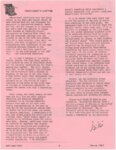
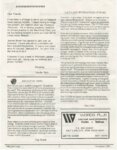
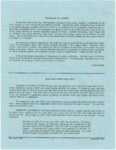
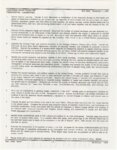
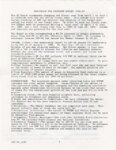
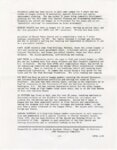
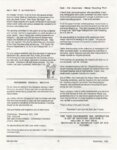
Show SOCIAL POLICY Contingent Workers For the sake of flexibility, growing numbers of Americans, most notably women, are forfeiting the basic rights of fulltime employment such as health benefits, pensions, and advancement opportunities. These workers comprise what is increasingly known as the contingent workforce -- those workers who are hired on a part-time, temporary, or contract basis. Although data are limited on this point, there is evidence that women constitute a significant share of these three types of contingent workers. Nearly three-quarters of all part-time jobs in the U.S. are held by women. For some of those women, contingent work represents an accommodation that serves their lifestyle and economic needs; for others the accommodation may not be in their best interests -- particularly over the long run. There ar~ several reasons why employers find contingent work attractive, the first being cost containment. Employers pay only for the work done, and rarely pay discretionary benefits such as health insurance, paid leave, job-retraining opportunities, or pensions. A second reason is flexible staffing -- a workforce that can be contracted, expanded, or redeployed according to demand. This flexibility will protect the employer from having to lay off massive numbers of fulltime workers during a recession. A third reason employers may prefer contingent workers is the desire to attract a highly skilled workforce, in which some workers want higher degrees of flexibility and autonomy than would be available to them on a salaried-employee basis. A fourth reason applies only to independent contracting, which some employers use to avoid the unions. There are also several factors which lead women to take contingent work, particularly those women with families. The first factor is a desire for a flexible work schedule. With over 60 percent of mothers working, there is a strong desire to find a way to accommodate the demands of both work and family. The second factor is the desire for supplemental income when a full-time income is not needed. It must be noted, however, that by accepting part-time work women trade off money for flexibility, since part-time work pays disproportionately less per hour than does full-time employment for exactly the same work. Part-time workers earn an average of $4.50 an hour compared to $7.80 an hour for full-time work. The third factor is that many women can't find full-time jobs, so they take these contingent arrangements as a way to survive. Many women are forced to hold two or more part-time jobs just to make ends meet. This is especially detrimental to single mothers with children. Whether women pursue contingent work out of choice, or by default, there are some potential problems that cannot be ignored. The most obvious problem is the lack of fringe benefits, and particularly troubling is the lack of pensions -- which will make women vulnerable in their old age. Another potential problem lies in the lack of advancement opportunities for contingent workers. Contingent workers are rarely considered for promotio~s .· within .a ·company. , The third potential problem has to do with whether workers hired on contingent bases will be able to get back into the core salaried-employee pool. And a further potential problem could be the steady increase in the number of women dual-job holders. Since part-time work pays disproportionat ely less than full-time, workers' earnings will be consistently cut by taking multiple part-time jobs. As noted earlier, however, there are benefits to contingent work. Working mothers may find this the best method to keep their career skills updated and take care of a family. The challenge the country will face is to ensure that these types of hiring practices enhance rather than hurt women's earning power, both in the short and long terms. --Sheryl Gillilan Social Policy Chair Based on Women and Contingent Work, by Kathleen Christensen. Social Policy, Spring 1987. -4- haJIM1Q87 |