| OCR Text |
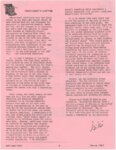
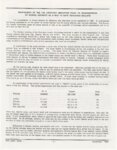
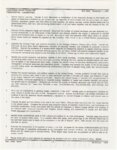
Show 6 percent, compared to an overall 2 percent rise in the consumer price index. A 1987 study by the Massachusetts Institute of Technology projected th'.:se trends into the future and concluded that by 2003 there could be 7.8 million fewer low-rent units than the number of households that need them. food programs run by religious and other nonprofit organizations. However, the Reagan administration has pressured for more private efforts to feed the poor and has argued that food programs, especially food stamps, should be de-federalized, with the states taking over funding and administration. The interest in turning such programs over to the states reflects a broader Reagan administration philosophy favoring less centralized government. Food policy experts, however, have opposed transferring food programs to the states, fearing even more drastic cuts in benefits, especially in poor states. A 1985 report from Bread for the World, a Christian anti-hunger advocacy group, also points out that many private food programs do not have the resources to provide for longterm food needs. Thus, although local governments and private groups can play an important role in alleviating hunger, a clear consensus has not emerged that they should assume responsibility for food programs. Federally Assisted Housing Programs Since 1937 the federal government has played a major role in providing affordable housing, financing the construction of 1.35 million low-cost, public housing units. Another 2.7 million low-income units have been provided through private owners, who contract with the Department of Housing and Urban Development (HUD) under several subsidized-rent programs, including the Section 8, Section 236, Section 221(d)(3) and Farmers Home Administration Section 515 programs. Housing: Unaffordable nd Un vailabl S ince the early 1980s, funding for these federal housing programs has been cut 60 percent, virtually halting the construction of new public housing and subsidizedrent projects. Meanwhile, growing demand has swelled the waiting lists for the few low-cost units available. Several other factors threaten to compound the problem. Roughly 70,000 public housing units are now abandoned each year, victims of neglect and slashed rehabilitation budgets. Many privately owned, subsidized-rent projects also are reaching the end of their contract periods; as many as 900,000 units could be sold, demolished or rented at higher rates over the next decade. The Reagan administration has favored an approach to housing assistance based on demand rather than supply. Under an experimental program, eligible families are given ''vouchers' ~a housing subsidy equal to the difference between 30 percent of their incomes and the ''fair market rents'' in their areas. The administration has strongly backed the program as less costly than public housing construction programs and a way to integrate low-income people into mainstream rental housing. The voucher program has been criticized for failing to address the dwindling supply of low-rent housing. Also, many landlords are either reluctant to participate in the program or unwilling to rent to low-income families, especially those with children. HUD's own data suggests that many low-income families, particularly minority families, that hold voucher certificates have trouble finding housing on the open market. As a result, each year about one-quarter of the vouchers provided through the program are not used. It's been nearly 50 years since Congress proclaimed the goal of ''a decent home and living environment for every American.'' Yet as we move into the 1990s, symptoms of the failure in U.S. housing policy abound-none more striking than the multiplying numbers of the homeless, now estimated at between 350,000 and two million. Recent surveys show that the homeless are not just ''skid row bums'' or ''bag ladies.'' Families and children represent as many as one-third of the homeless nationwide. What has caused the housing crisis? Experts point to the decreasing supply of affordable housing as well as to drastic cuts in federal housing programs over the past six years. Like other economic problems, the housing crisis most severely affects the poor, many of whom have relied on low-cost rental housing. However, between 1970 and 1980, the median rate for rent in this country rose UO percent while renters' median income rose only 66 percent. As a result, by 1983, 6.3 million low-income households were paying more than half of their incomes for rent and utilities, up from 3.7 million in 1975. More than half of renters earning under $7,000 a year spent more than 60 percent of their income on housing in 1983. Such families, in many cases, are only one catastrophe away from homelessness. The future promises little hope for easing the situation. Between 1985 and 1986, rents climbed another 5 |