| OCR Text |
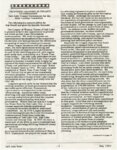
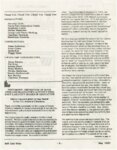
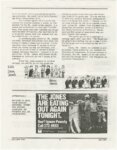
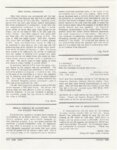
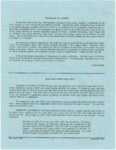
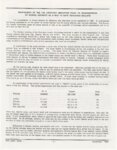
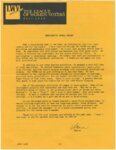
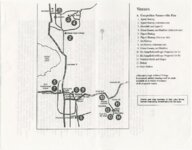
Show WASATCH CANYONS MASTER PLAN EDUCATION: AN INCREASINGLY ESSENTIAL CORNERSTONE FOR ECONOMIC PROSPERITY These are excerpts of a LWVSL statement to the Salt Lake County Wasatch Canyons Master Plan Options Hearing, on August 1, 1988, by Genevieve Atwood, Chair and Sharon Walkington, Co-President. UNIT STUDY TOPIC AND CONSENSUS BRIEFING Past position statements of League of Women Voters strongly endorse wise management of resources in the public interest: That natural resources should be managed as interrelated parts of life supporting ecosystems. Resources should be conserved and protected to assure their future availability. Pollution of these resources should be controlled in order to preserve the physical, chemical and biological integrity of ecosystems to protect public health. Specifically, the national, state and local chapters of the LWV have endorsed stringent controls to protect water quality, the creation of regional parks, acquisition of land for public use, planning reflecting conservation and wise management of resources. The local LWV endorses the acquisition of park land in the county, and the state LWV endorses strong land-use policies, including county-wide zoning for hillsides and other natural hazards and effective management of ordinances protecting natural resources. The LWVSL supports the following: 1 . Protection of water quality. 2. Acquisition of rights of way for the public interest. 3. Mass transit. 4. Mined land reclamation 5. Identification and disclosure of information on natural hazards 6. Coordination of Wasatch Canyon entities. 7. Investigation of the possibility of a regional government entry for canyon planning. In addition, we suggest inclusion of the possibility of aquifer recharge at canyon mouths, a discussion of the details of the Forest Service and Salt Lake City policies and proposals for land exchanges and more scenarios for City Creek, Red Butte, Emigration and Millcreek Canyons. At present, the document focuses on Big and Little Cottonwood Canyons and pays less attention to the equally important but apparently less urgent issues of the other canyons. Salt Lake Voter OCTOBER 12, 1988 12:15 pm ST. MARK'S CATHEDRAL SPEAKER: DAVID ADAMS Executive Director of UTAH DEPT. OF COMMUNITY and ECONOMIC DEVELOPMENT "A quarter-century ago, companies looked for cheap labor, cheap power, and good transportation. Physical infrastructures was the key. Today companies look for educated workers, excellent universities, entrepreneurial climates, and an attractive quality of life. Good roads and airports are still important, but intellectual infrastructure is the key." This quote from an INC. article on state economic development policies underlines the purpose of the Utah League study, "Education: An Increasingly Essential Cornerstone for Economic Prosperity." At the same time that the League has undertaken its study, a joint effort between the State Board of Education, the State Board of Regents and the Task Force on Education and Economic Development has released its report, "The Utah Partnership for Educational and Economic Development." The Partnership has identified five objectives in the areas of training, basic education, resources, research and image and identified issues and answers in each area. The report also identifies the responsible parties in each action area. The objectives are: 1) To provide training programs that are more "market driven and produce a highly qualified work force to a technology-based economy; 2) To improve basic education at all levels for a more literate, productive and responsible citizenry; 3) To maximize all available resources for mutual benefit; 4) To enhance college and university research and development efforts to stimulate new business; and 5) To improve the image of Utah's economic, educational and cultural assets to communicate tlie state's unique strengths. --Gigi Brandt -4- October 1988 |