| OCR Text |
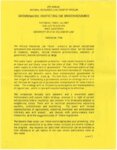
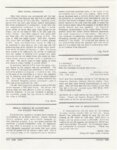
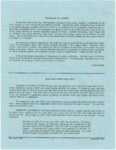
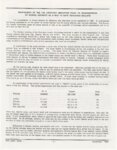
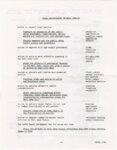
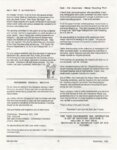
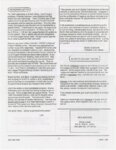
Show REGUIATION OF PESTICIDES ( WELCOME NEW MEMBER ) Merry Nimkin 1419 Browning Ave. Salt Lake City, UT 84105 582 - 8211 Pesticide regulation involves difficult scientific questions and judgments. It also ·requires much time and money -- both of which have been in short supply among federal regulatory agencies. Moreover, budget priorities play a part in determining the effectiveness of regulation. For example, FDA officials view microbiological contamination of food as a greater health threat than pesticide contamination, a judgment reflected in how they allocate resources. (ATTEMPT TO WEAKEN FOOD SAFETY RULES) In a strongly worded letter to members of the House Committee on Agrilculture, LWV President Nancy Newman urged lawmakers to oppose legislation that would weaken current laws governing food safety and pesticide use. H.R. 3292, sponsored by Rep. E. (Kika) de la Garza (D-TX), would preempt stricter state laws and limit citizen participation in the policy making process. Fragmented Authority Authority for pesticide regulation currently is fragmented among federal agencies. EPA registers a pesticide for use and determines the maximum_ allowable residue, or tolerance, for all food crop uses of the pesticide. The United States Department of Agriculture (USDA) monitors pesticide residues in meat and poultry. FDA monitors residues in all other food products. Pesticides were originally regulated by USDA under the authority of the Federal Insecticide, Fungicide and Rodenticide Act of 1947 (FIFRA). Pesticide regulation originated as an attempt to protect farmers from fraudulent marketing practices, with USDA responsible for regulations requiring all pesticides to be registered and properly labeled. In 1970, authority for FIFRA was moved to the newly established EPA. FIFRA was amended by subsequent legislation in 1972, 1978 and 1988. The 1972 amendments acknowledged the possible adverse environmental effects of pesticide use and called for a registration process involving a determination of safe use. Pesticide manufacturers (registrants) were required to submit data for EPA review. Pesticides registered before 1972 were grandfathered in at the time but amendments did call for a re-registration process. "Reform of the laws governing food safety and the use of pesticides is necessary to restore public confidence in the safety of the food supply," Newman wrote. "H.R. 3292 would preempt stricter state legislation and would restrict citizens' abilities to participate in policy-making. - From Report From the Hill (EMPLOYMENT OPPORTUNITIES) As a service to our readers, there will be a regular section in the VOTER with employment opportunities listed. The League office receives many notices of openings for employment. If there is anything listed here that catches your eye, you may want to stop in at the League Office for more information about these and other employment openings. TECHNICAL EDITOR - Works with marketing communications to write, edit and publish technical and marketing documents, manuals, and sales tools. SOFTWARE ENGINEER - Provide software support for a wide range of existing Eaton-Kenway sites, including creation of software changes for system enhancements and software upgrades. Contact: Eaton - Kenway, Inc. Human Resources Dept. 515 E. 100 S. P.0.8. 45425 Salt Lake City, UT 84102 Salt Lake Voter -10- March 1990 |