| OCR Text |
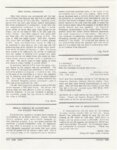
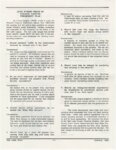
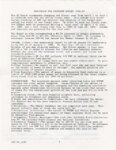
Show on their own. Supporters of social programs have increasingly criticized the federal government for allowing AFDC benefit levels to sink so low that poor families cannot even afford basic necessities. in 22 of 25 major U.S. cities, with many noting a sharp rise in the number of families with children requesting assistance. The impact of increased hunger is striking. Progress toward reducing America's infant mortality rate has slowed and the number of infants born at very low birthweights has risen-partly due to poor nutrition among mothers during pregnancy and to poor infant nutrition. Public health workers also have noted increasing cases of stunted growth, anemia and abnormal weight in children. / n the past two years, a number of proposals to overhaul the AFDC system have been debated widely. Building on an apparent consensus that AFDC recipients should be required to participate in work or work-related activities, most of the proposals call for: • increasing AFDC benefit levels and making payments more uniform nationwide; • enforcing child support requirements more stringently; • requiring mandatory work or job-training in exchange for benefits (see box on Work Programs for Welfare Recipients); • extending support services such as subsidized child care and medical insurance to former welfare recipients for a limited amount of time after they begin employment. To date, disagreements over the shape of work programs, the extent to which child care should be subsidized and the high price tag of many of the proposals have cast doubt on whether Congress will pass meaningful reform. In addition, there are differing opinions about which level of government should be primarily responsible for family income assistance programs. Some welfare advocates want the federal government to have more control to ensure uniform benefit levels. Others maintain that the states should have maximum flexibility to design their own programs. How these "responsibility" issues get resolved could very well determine the adequacy of income assistance programs in the years to come. The Status of Federal Food Programs The largest food assistance program in this countrythe federally funded food stamp program-helps feed 19 million people and will cost $11.7 billion in FY 1987. Despite the high price tag, however, it is estimated that 11 to 13 million eligible people do not participate in the program; underparticipation is particularly acute in rural areas. Recent federal budget cuts have exacerbated the problem by eliminating one million people-primarily the working poor-from the food stamp rolls and by reducing benefits. Other federal food programs-the school breakfast and lunch program, child care food programs and summer food programs-were cut 29 percent between 1982 and 1985. As a result of budget cuts in the school lunch program alone, two million fewer children receive reducedprice or free meals. T wo nutrition programs that have remained virtually intact in the 1980s are the Special Supplemental Food Program for Women, Infants and Children (WIC) and emergency food programs. Congress has provided for moderate growth in WIC. Still, although the program reaches 3.4 million people, the Children's Defense Fund estimates that this is fewer than one-half of those eligible. Since 1983, Congress has allocated $50 million each year for emergency food programs, helping charities and soup kitchens store, distribute and transport surplus food to the needy. Hunger in America Increasing poverty in the 1980s coupled with cuts in federal food programs have dramatically increased the number of Americans who need ongoing or emergency food assistance, reversing almost 20 years of progress in reducing hunger and malnutrition in this country. New evidence of widespread hunger is mounting: • A 1985 study by the Harvard School of Public Health estimated that about 20 million Americans experience hunger at- some point each month and that almost 500,000 children may be malnourished. • In December 1986, a U.S. Conference of Mayors survey reported that requests for emergency food a~sistance had increased by an average of 25 percent Feeding the Hungry: Whose Responsibility? With the glaring gaps in federal food programs in the 1980s, new questions have been raised about who should take responsibility for feeding the poor. Federal food programs always have been supplemented by emergency 4 |