| OCR Text |
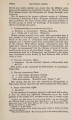
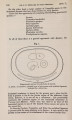
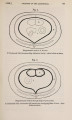
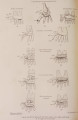
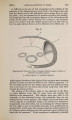
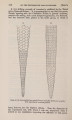
Show 666 DR. H. GADOW ON THE REMIGES OF BIRDS. [Dec. 18, feathers have been turned ventralwards around the posterior or ulnar margin of the wing, and that these birds have retained a primitive condition. If we mark the last dorsal posterior series of the Penguin's potential primaries with A, then A will in Slruthio represent the only existing series of greater under coverts, whilst the primaries of Struthio have to be marked B. This series B has overgrown the series A, as is already indicated by the fact that in the Penguins the last but one series, viz. B, contains somewhat larger feathers. Lastly, in the majority of Carinatae A and B represent the larger under coverts, and the series C, i. e. the third last of the Penguins, has been developed into the series of primaries, whilst series D forms the upper larger wing-coverts. This would mean of course that the Penguins retain a condition which in other birds is referred to their embryonic life, whilst Struthio represents an intermediate stage, provided, however, that in Struthio no secondary reduction from several to one series of under wing-coverts has taken place. Such a reduction I assume in Rhea, and likewise in the Oscines, which possess only one row of larger under wing-coverts. However, Mr. Wray has shown that Struthio shows various conditions which in the Carinata? are repeated during their embryonic growth only. Unfortunately, about the embryonic development of the Penguin's wing we know nothing; we cannot explain either the enormous number of series of the wing-feathers nor the number of the feathers in each series; we have to look upon them as the result of special modifications, There is no reason why the skin of the wing should not develop any number of feathers. Concerning the cubital quills, we know that their number increases with the length of the forearm, the additional increase in number taking place in the region of the elbow. Archceopteryx does not throw much light upon the question. It possessed 6-7 primaries, most of which were carried by the third metacarpal and by the third finger. The number of cubitals was 10. The first Reptile-like Birds probably possessed a rather uniform covering of feathers on their wings. The feathers of the under surface were soft, more downy, those of the upper surface stronger and smoother. The first feathers which grew out stronger and larger were those on the upper hinder margin of the forearm ; this resulted in a protection of the sides of the body, and in the possibility of these feathers being occasionally used as a parachute. Natural selection preserved and improved these advantageous acquisitions, in a similar way as the scales on the hinder margin of the "fins" of Turtles are elongated and flattened out. Later on the elongation and strengthening of the posterior marginal feathers extended over the metacarpus and over the fingers, which at this stage were still free and not anchylosed with each other. If these ancestral birds possessed a cutaneous patagium, this was gradually restricted to the proximal region between arm and trunk, where no remises are developed. Such a structure might have interfered with the foldin"-- up of the wing. |