| OCR Text |
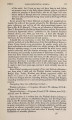
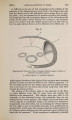
Show 1888.] STRUCTURE OF CLITELLIO. 489 in Peloryctes inquilina the extent of the clitellum and the distribution of papillae is variable. I had fully developed sexual individuals in which there was not a trace of clitellum ; all the area of segments 10-12 was covered with papillae like the rest of the surface of the skin ; in others, on the contrary, either segments 9 and 10 or 10 and 11 were devoid of papillae. In the anterior part of the body all the first three segments were sometimes devoid of papillae, sometimes only the head. Finally the last 10 or 11 segments were often without papillae." It does not appear to me that these facts are necessarily opposed to the view that Peloryctes inquilina is synonymous with Clitellio ater. It is a well-established fact that the clitellum is variable in its appearance ; and I have myself observed specimens of Clitellio ater in which the clitellum was fully developed and without papillae, or not developed and with papillae. The hinder end of the body in my specimens was generally, if not always, devoid of papillae. Claparede does not apparently mention this fact, but his description of the species is very brief and incomplete. With regard to the absence of the papillae on some of tbe anterior segments, I may state that in m y specimens the papillae commenced rather gradually and that those upon the anterior segment were, at least in some individuals, considerably smaller than the papillae of the following segments; this may perhaps account for the discrepancies between Zenger's observations and those of Claparede. There may be something in the structural differences between the papillae of Peloryctes inquilina and those of C. ater; the papillae of the former species are stated by Zenger to resemble very closely those of Pachydrilus verrucosus. The setae of Peloryctes inquilina are all bifid, but they are alleged to differ from those of Clitellio ater in the number per bundle-a character which I cannot admit to be valid, as I have found great differences in this respect between individuals of C. ater, and indeed of other species of Oligochaeta ; it is, I think, recognized that in those forms with a large number of setae in the bundle the number is variable. Another point which Zenger raises is the characters of some of the transverse branches which unite the dorsal and ventral trunks in some of the anterior segments. In the 7th, 8th, and 9th segments of Peloryctes inquilina these trunks are specially dilated, and this difference from other Tubificidre is regarded, in conjunction with the other points of difference, as sufficient to necessitate the establishment of a new genus. The generic name is Leuckart's, and was originally applied to Clitellio arenarius until the latter was shown to be identical with Savigny's Clitellio arenarius; Zenger therefore, and this proceeding of his will not be admired hy those who regard zoological nomenclature as a serious subject, resuscitates the name Peloryctes to apply it to his species. In the examples of Clitellio ater which I studied I found it to be by no means so easy as in Limnodrilus to distinguish any of the vascular arches of the anterior segments as specially enlarged ; in some specimens, however, the vascular arch of the 8th segment, as in Tubifex, was decidedly stouter than the rest ; in other specimens this difference was not so striking, and then the arches of 6, 7, and 8 |