| OCR Text |
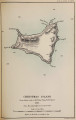
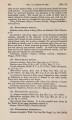
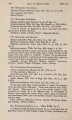
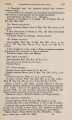
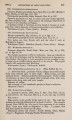
Show 1888.] HISTORY OF CHRISTMAS ISLAND. 515 III. GEOLOGICAL HISTORY. The geological history of the island appears to be as follows:- The summit of the submarine volcanic mass has been slowly elevated above the sea to a height of nearly 1200 feet, and as it passed through the zone of lime-forming organisms in shallow water these have invested it with a cap of limestone. The upheaval has been arrested at intervals and allowed the formation of reefs which have since been elevated and form the terraces at the sides. At the projecting headland, where the chief stress of the ocean-currents fell, the reefs have grown less than in the intervals between them; and since their elevation the action of the waves has been greatest at these points; hence we find that at the headlands the terraced slopes are replaced by a single abrupt descent. At the head of Flying-Fish Cove, however, there is a single high cliff replacing the terraces, though it is protected by a spur sent down on either side, which end in Rocky Point to the east and Smith's Point on the west. This is, perhaps, due to the conformation of the volcanic basis which underlies the limestone. Captain Wharton points out (op. cit.) that the raised reefs forming the summit of Christmas Island are the highest that are known in the world. I have already said that the island is covered with dense bush. It extends often from the edge of the shore-cliff, where the branches reach out over the sea, to the summit. Hence, it is impossible to obtain any general view over the island, even from the top, and several interesting points as to its inland conformation remain at present undecided. There was ho sign of standing water or of stream-beds. All the rain that falls, and from the fresh greenness of the vegetation there is evidently an abundant rainfall, soaks at once into the porous limestone-rock and finds its way to the sea below the surface. There is, however, a patch of rounded pebbles near the summit which are described by Mr. Murray as " very much altered volcanic stones, many of them coated on tbe outside by peroxide of manganese;" they have no earth about them and cover an ill-defined oval area about 38 yards in length, and 10 yards in width, the long axis in the direction of the gentle slope of the surface at this part. It is covered with a bed of tall ferns (Nephrolepis acuta). It occurred to me that after heavy rains there may be a spring at the upper part of this area, the water reaching the surface here but sinking in again beyond it. IV. VEGETATION. The shores are fringed with widely-spread littoral plants:-Hibiscus tileaceus, with its beautiful crimson-edged yellow flowers; Tourne-fortia argentea, a large silvery-green shrub with racemes of closely crowded small white flowers; while on the shore-cliff grew Scaivola kcenigii in bright green rhododendron-like masses, with white flowers, the favourite haunt of a brown and white Butterfly, Vadebra macleari, |