| OCR Text |
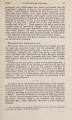
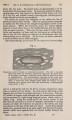
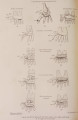
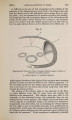
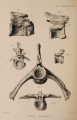
Show 1888.] ANATOMY OF THE MESOSUCHIA. 419 In immature individuals all the component elements of the atlas are distinct, but in mature individuals they are often synostosed, as are also the atlas and epistropheus. Basilar piece (Stannius).-In its form and its connections this part agrees closely with that of extant Crocodilians. Its anterior or cranial surface contributes nearly the lower or ventral half of the articular cup for the reception of the occipital condyle. Its inferior surface is convex transversely ; whilst its superior is slightly concave in this direction, and it is adapted to the corresponding surface of the pars odontoidea. Its supero-lateral margins unite with the " lateral pieces." Its posterior margin, thin, has at its junction with the lateral margin, on each side, a large articular facet for the first pair of ribs. " Lateral pieces}'-These are composed of a thin, compressed, upper part which forms the side-wall of the neural canal, and of a stouter lower half. The division between these two parts is indicated on the median surface by a slight horizontal ridge which marks the former attachment of the " transverse ligament." The anterior border of the stouter lower part is so wide that it deserves the term surface. Smooth, articular, forming a small segment of a circle, it contributes the upper lateral border of the occipital cup. The inferior border of the lateral piece unites with the superolateral border of the " basilar piece." The posterior border, and the upper border of the upper part of the lateral piece, that part which bounds the neural canal, are thin; and at their junction they are produced backwards, and they form a rudimentary post-zygapophysis which articulates with a similarly dwarfed pras-zygapophysis on the epistropheus. The outer surface of the " lateral piece " is traversed obliquely by a ridge, which, starting from the angle formed by the junction of the anterior and superior margins of that part of the bone which bounds the neural canal, descends in a backward direction towards the postero-inferior angle, where it ends in a small projection or tubercle situated in the level of the diapophysis on the epistropheus. For reasons presently stated this little tubercle should rank as an upper atlantal transverse process or diapophysis. The median aspect of the stouter, lower part of the lateral piece rests on the pars odontoidea. Pars odontoidea.-This has a slightly skewed cubic or pyramidal form, its inferior or ventral part being slightly smaller than the upper. The posterior surface, plane, is marked by horizontal ridges and furrows indicative of synchondrosis with the cranial, terminal surface of the centrum of the epistropheus. In aged individuals it is frequently synostosed with this. The outline of this (posterior) surface of the pars odontoidea is an inequilateral four-sided figure, in which the upper is longer than the lower side Upon its upper surface may be discerned (1) a relatively wide. smooth, median tract-the floor of the neural canal; this is slightK encroached upon laterally by (2) a rough synchondrosial impression, marking the attachment of the neurapophysis, which also descends upon the lateral surface. The postero-lateral angles of the upper |