| OCR Text |
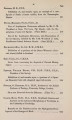
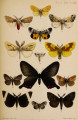
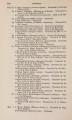
Show 650 MR. J. H. LEECH ON THE [Dec. 18, The brown coloration varies in tint from greyish to laky brown ; both sexes have a discal series of black dots on primaries. Yokohama (Jonas and Pryer) ; Oiwake, Yesso (Pryer); Hakodate (Whitely). 332. ORETA PULCHRIPES. Oreta pulchripes, Butl. Ann. & Mag. Nat. Hist. (4) xx. p. 477 (1877). An extensive series, coll. Pryer. There is much variation in tone of colour and definition of markings in this species. Some examples are dark reddish brown with a lilacine suffusion, others are pale yellowish brown, tinged with rosy lilacine, especially along the costa of primaries. Then as regards the linear markings, these in the darker-coloured examples are not very distinct; but in pale specimens they are conspicuous. Often the area enclosed by the transverse lines is darker than rest of wing, thus giving a band-like character. The costal black spots as well as that at external angle are not always clearly defined and are often quite absent, whilst two examples have a colon-like spot at external angle. When the outer grey line of primaries is well defined, it can be traced from the outer costal spot, from whence it runs for a short distance towards external margin, then turning sharply inwards continues its course to near the middle of the wing, when it curves gently and terminates on the inner margin; the costal extremity of yellow border of this line is sometimes placed in a pale apical patch. Yokohama (Jonas and Pryer) ; Oiwake (Pryer). 333. ORETA CALCEOLARIA. Oreta calceolaria, Butl. Ann. & Mag. Nat. Hist. (4) xx. p. 478 (1877). A fine series, coll. Pryer. In this species the reddish-brown colour of wing-markings is a variable quantity. Sometimes the entire areas representing the basal two thirds of primaries and basal third of secondaries are reddish brown. The sulphur colour on the outer portion of all the wings is often sprinkled with dark grey dots, and sometimes a larger spot or two occurs at external edge of primaries. All the characters, both structural and ornamental, of this species are identical with those found in 0. pulchripes, and the only difference I can see between the two insects is one of colour. Yokohama, Oiwake (Pryer). 334. HYPSOMADIUS INSIGNIS. Hypsomadius insignis, Butl. Ann. & Mag. Nat. Hist. ser. 4, vol. xx. p. 479 (1877). Yokohama (Jonas). 335. GONOPHORA DERASA. Phalcena-Noctua derasa, Linn. Syst. Nat. xii. p. 851. |