| OCR Text |
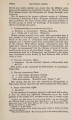
Show 488 MR. F. E. B E D D A R D O N THE [Dec. 4» in fact be distinguished by the characters of the reproductive organs (see p. 490). These points are evidently appreciated by Vejdovsky ', who suggests that 1'ubifex benedii may be a synonym of Clitellio arenarius. This is probably an error in printing ; there can be little doubt that Vejdovsky meant to place T. benedii as a synonym of Clitellio ater, an identity which has been pointed out by Vaillant2. D'Udekem gives a woodcut illustrating the papillae of his Tubifex benedii, and there is no doubt in m y mind about the identity of this species with Claparede's Clitellio ater, which, however, as will be pointed out later, is not a Clitellio at all. The remaining species-Tubifex hyalinus-is very probably the same as Clitellio arenarius. There is at any rate nothing to be said against this identification ; and it is more probable that the species is a Clitellio than a Limnodrilus, for the reason that the latter genus is, so far as is certainly known, an inhabitant of fresh water 3. The preliminary list of the marine fauna of Plymouth, published in the second number of the ' Journal of the Marine Biological Association,' contains a single Oligochete, Tubifex lineatus. This species, if it be identical with that described in Johnston's ' Catalogue of British Non-parasitical W o r m s ' (p. 66), is certainly not a Tubifex, since the setae are there stated to be entirely /-shaped, but not bifid ; this may be due to wear, and the species is perhaps a Clitellio, possibly the same as Clitellio arenarius. This species, however, as well as Tubifex bilineata and T. pellucidus, all of which are recorded from Devon in Parfitt's ' Catalogue of the Annelids of Devon,' require investigation. Parfitt mentions the occurrence of Clitellio arenarius4. Peloryctes inquilina has been described somewhat fully by N. Zenger °; the species is not referred to by Vejdovsky in his account of the Tubificidae, though the paper is quoted in his list of literature. Having been at some trouble to translate certain portions of Zenger's paper from the Russian, I can offer the following remarks upon its systematic position. The species occurs in the " Kieler Bucht " at a depth of 12 fathoms, either living freely in the m u d or sand or upon the shell of Mytilus edulis. Prof. Mdbius, w ho first found the worm, considered it to be identical with Claparede's Clitellio ater. It is of a dark red colour, owing to its red blood and the dark papillae on the surface. Zenger considers that the papillae distinguish this species from Clitellio ater, both in their distribution and in their structure. In C. ater " the first head-segment is never covered by papillae, and half the second segment as far as the setae is also free from papillae; papillse are in addition absent from the space extending from the 10th to the 12th segment, which is occupied by the clitellum ; 1 Syst. u. Morph. d. Oligochaeten, p. 45. 2 Essai de Classification des Annelides Lombriciens," Ann. Sci. Nat. (Zoologie), t. x. (1868), p. 251. 3 Forel (Bull. Soc. Vaud. xiii.), however, describes a Clitellio from the Lake of Geneva (cf. footnote to p. 494). 4 Trans. Devon. Assoc. 1867, vol. ii. 3 Bull. Soc. Imp. Nat. Moscou, 1870. |