| OCR Text |
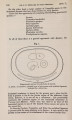
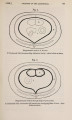
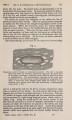
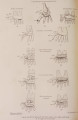
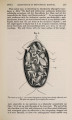
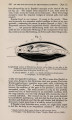
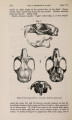
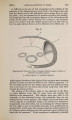
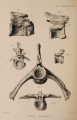
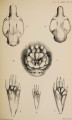
Show 418 MR. J. W. HULKE ON THE SKELETAL [Nov. 20, the Oxford Clay l, near Peterborough, obtained by A. Leeds, Esq., to whom I tender m y warm thanks for most courteously affording me an opportunity of studying them at leisure during the past winter. They are easily freed from the clay by washing, after which many of the bones, except for some crushing by earth-pressure, are nearly as complete as freshly macerated osteological specimens. The mode of their occurrence in the rock, their facies, and their relative proportions concur in affording a high degree of probability to Mr. A. Leeds's conviction that each of his series represents one individual, and is not derived from several skeletons. An impression that they help to clear up some points in the skeletal structure of the earlier Crocodilians hitherto obscure and requiring confirmation is m y apology for offering an account of these remains. Mr. Leeds's collection contains remains referable to both the primary groups into which Messrs. E. and E. E. Deslongchamps in their classical 'Memoirs' (6) divide the family Teleosauria ; their genus Teleosaurus is exemplified by a member of the subgenus Steneosaurus, and their genus Metriorhynchus by probably more than one species. Mr. Leeds tells me that Steneosaurian remains occur sparingly and they are restricted to the upper beds, whereas those of Metriorhynchus are plentiful, and they are distributed throughout the whole series of the beds, from the uppermost to the lowest exposed in the pits. The cranial characters distinctive of the two genera laid down by Messrs. Deslongchamps (7) are plainly recognizable in the skulls in Mr. Leeds's collection. As, however, these are much crushed and otherwise imperfect, I do not offer any description of them. METRIORHYNCHUS. Vertebrae.-All, except the first two and the two sacral, have both terminal surfaces of the centrum more or less concave, the character which stamps the Protosuchii of R. Owen (8), the Mesosuchia of T. Huxley (9), and distinguishes these from all the more recent Crocodilians, including those of Tertiary age and also the extant members which together compose Huxley's suborder Eusuchia (10). Atlas.-This vertebra (Plate XVIII. fig. 1) is composed of the same elements as in extant Crocodiles, viz.-of an azygos ventral piece ("basilar Stuck," Stannius) (11); of a pair of lateral pieces which, in conjunction with the basilar piece, constitute an incomplete ring; of a pars odontoidea ; and of an upper piece (" piece supe-rieure," Cuvier; oberes Schlussstiick of German zootomists). The existence of this last element may not be doubted, although it is not preserved in any atlas in the collection, since its presence has been demonstrated in the earlier Crocodilians of the Lias (12), in those of contemporary rocks in Normandy (13), in those of Tertiary rocks (notwithstanding Ludwig's opinion that it is absent from the Crocodilians of the Mayence basin (14)-an idea founded on a misapprehension), as it is also in all extant Crocodilians. 1 Through misapprehension of information given m e respecting these pits. I was formerly under the impression that they were in the Kimmeridge Clav. ' |