| OCR Text |
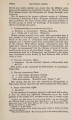
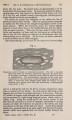
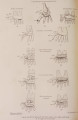
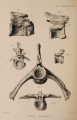
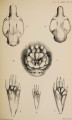
Show 1888.] MORPHOLOGY OF SUPERNUMERARY PHALANGES. 503 C. CYSTIGNATHID-E. Examined:- Hylodes martinicensis, 24 millim. Lymnodynastes tasmaniensis, 40 millim. Hylodes is especially interesting in the fact that, while possessed of expanded digital extremities, it shows no trace of a distinct supernumerary phalanx. This combination lends additional support to Boulenger's deduction, that the phalanx in question bears no definite relation to the platydactyle type. d. RANI:>E. Examined :- Ixalus schmardanus (juv.), 11 millim. Megalixalus madagascarensis, 32 millim. Rana arvalis (juv.), 27 millim. Rana maximus, 90 millim. Rana temporaria, adult, and 14 millim. (tail just gone). Rappia marmorata, 27 millim. Rhacophorus eques, 42 millim. We have already dwelt in sufficient detail (p. 500) upon the supernumerary phalanx in this family; all stages are represented, from the completely ossified one (Peters and Boulenger, 11. cc.) to that of a degraded syndesmosis (Rana temporaria, Plate X X V . fig. 16). The syndesmoses of the remaining joints are, in the adults of all species examined by us, with the exception of Rana arvalis, modified to form, more or less efficiently, the ligament and annulus apparatus of the Hylidce. R. arvalis would appear to be less conspicuously modified than the other members of this family, in that the ordinary syndesmosis is retained for both the terminal and penultimate joints. W e have, however, only examined a young specimen. e. DISCOGLOSSIDAE. Examined :- Alytes obstetricans, 30 millim. Hombinator bombinus, 41 millim. Discoglossus pictus, 62 millim. In all three genera the phalanges are united, in both fore and hind limbs, by syndesmoses. Those of the terminal joints are in no way in excess of at least that of the penultimate one. These syndesmoses are (cf. fig. 11), for the most part, closely bound down to the faces of the apposed epiphysial cartilages. In the hind limb of Bombinator there is a suggestion of a loss of direct connection between the two, with the development of a shallow articular cavity, while, in the proximal joint of the same, the syndesmosis is in a loose and somewhat degenerate condition. These modifications are, however, exceedingly feeble and unimportant, and, making all due allowance for them, the Discoglossidae are seen to |