| OCR Text |
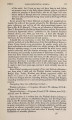
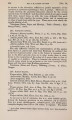
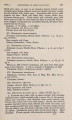
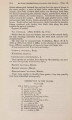
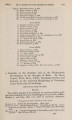
Show 4 MR. O. THOMAS ON MAMMALS FROM [Jan. 17, made such a collection as the present, nearly every specimen of has been carefully labelled in his own handwriting, with the date, sex, and exact locality-particulars which add enormously to its scientific value. The great mass of the collection was not obtained at Dr. Emin s headquarters, on the Upper Nile, but in a district called Monbuttu (lat. 2° 30' N., long. 27° 50' E.), just within the Congo basin1, and separated by the Congo-Nile watershed from the Wadelai region. There, practically, all the interesting forms were collected; and, considering their number, and especially their strongly marked geographical character, the general affinities of the mammal-fauna of this district may now be looked upon as settled; their affinities are discussed at the end of the present paper. Of the more recent papers on the Central-African mammal-fauna the three following are the most important:- 1. Pagenstecher, Dr., " Die von Dr. G. A. Fischer, auf der im Auftrage der geographischen Gesellschaft in Hamburg unternom-menen Reise in das Massai-Land gesammelten Saugethiere " a. 2. Noack, H., "Beitragezur Kenntniss der Saugethier-Fauna von Ost- und Central-Afrika "3. 3. Leche, W., " Ueber einige von Emin Pascha gesammelte afrikanische Saugethiere " 4. The first of these contains notes on 31 species of mammals, but the region explored by Dr. Fischer has so different a fauna from Monbuttu, that only some three or four species, and those very widely spread, are common to both collections5. Dr. Noack's paper also, based on the mammals collected by Dr. Bohm in the Marungu country, on the south-west coast of Lake Tanganyika, refers to a fauna very different to that of Monbuttu, although several species, and those some of the most interesting (e. g. Sciurus boehmi and Mus kaiseri), are found in both districts. Finally, Dr. Leche's paper is founded, like the present one, upon specimens collected by Emin Pasha. Fifteen species are enumerated, but these come chiefly from the Upper Nile district, only three of them occurring also in the Monbuttu collection. The localities given are so widely scattered that tbe paper, although important for the histories of the individual species, gives but little definite faunistic information. There is also a list of 71 species observed in Niam-niam-land, given at the end of Dr. Schweinfurth's ' Im Herzen von Afrika,' but 1 On the assumption that the Uelle is really an affluent of the Congo, and does not run, as has been suggested, north-westwards to Lake Chad or into the Niger basin. 3 JB. Mus. Hamburg, 1884, pp. 32-46 (1885). 8 Zool. Jahrb. ii. pp. 193-302, pis. viii.-x. (1887). 4 Zool. Jahrb. iii. pp. 115-126, pis. iii. and iv. (1887). 5 Dr. Pagenstecher (pp. 40 and 41) places Gazella thomsoni and Alcelaphus cokei as synonyms of G. granti and A. lichtensteini respectively, observing that they are " figured but not described " in Thomson's ' Masai-Land,' 1885. H e seems, therefore, to be unaware that these species were originally described by Dr. Giinther (Ann. & Mag. N. H . [5] xiv. p. 426, 1884). |