| OCR Text |
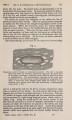
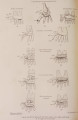
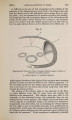
Show 1888.] MORPHOLOGY OF SUPERNUMERARY PHALANGES. 505 and, except for a slight thickening of the distal one (most marked in Proteus), there is nothing demanding general consideration beyond that already given (ante). Spelerpes is particularly instructive in the fact that while its digits terminate in well-marked and cup-shaped disks, its distal syndesmoses are normal and comparatively thin, and in no way in excess of the proximal ones (sy.', fig. 15). There are one or two matters concerning this Order, in respect to which our results are not in harmony with those of our predecessors. Hyrtl, in dealing (8. p. 70) with the pes of Salamandra maculosa writes: "Cartilago primae seriei, cum ilia secundae, fibrosis vinculis cohaeret, quod etiam de metatarsi primi cum cartilagine secundae seriei conjunctione valet. Omnes reliquae articulationes normales." The last statement we cannot confirm; some of our sections show a slit in the syndesmosis in question, but that is, almost to a certainty, artificial. Leydig, in his short description of our supernumerary phalanx (his " Zwischengelenkknorpel " ) , writes (14. p. 160):- "Endlich sei an dieser Stelle bemerkt, dass auch bei Salamandra. in der bindegewebigen Substanz der Sehnen des Zehenbeugers langges-treckte Nester von Knorpelzellen vorhanden sind, wie solches von ungeschwanzten Batrachiern seit langem bekannt ist." Our specimens show nothing of the kind, and the syndesmoses are, in them, throughout, uniform and simple. The figure which Leydig publishes (/. c. pi. xi. fig. 26) in illustration of this statement greatly excited our curiosity-for, did it hold good, it would follow that S. atra would be, in respect to its joints, in advance of the Discoglossidce. The fig. more nearly recalls the condition of tbe parts in a Hylid; and if it delineates that which it purports to do, it must be either a bad drawing of a crushed or ill-preserved specimen or that of an abnormal one. Peters undoubtedly regarded the supernumerary phalanx as a correlation of the platydactyle condition. He did not actually state this, but it is to be inferred from his classification. Boulenger shows that his (Peters's) Polypedatinae was an unnatural group and (2. p. 205) that "Cassina, though oxydactyle, and therefore placed by Peters in his Ranince, has the additional phalanx." This investigator's demonstration that (/. c.) all the species of his genus Rana " have the normal phalanges, irrespective of the presence or absence or size of the digital expansions," goes far towards disproving a supposed connection between the supernumerary phalanx and the expanded digit. Our own researches reveal the presence of a fully developed supernumerary phalanx in families other than the Ranidce, and they fully bear out Boulenger's deduction ; while the discovery that the syndesmosis does not become converted into a true phalanx in the platydactyle Hylodes, Nototrema, and Dendrobates, amounts to a substantiation of the same. The condition of the parts in Spelerpes is especially interesting in both its morphological and physiological aspects. The expansions |