| OCR Text |
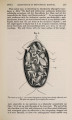
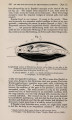
Show 358 MR. E. L. LAYARD ON THE GENUS STENOGYRA. [June 19, I regret to have no further stages in the life-history of this Gregarine ; I have not yet seen any evidence of sporulation, except in the division of the nucleus. I propose, however, to publish a fuller description later, when I may perhaps have succeeded in discovering the formation of spores. I think it is clear that this organism is a Sporozoon, and that it belongs to the Gregarinidae ; I refer it to the true Gregarines on account of its general form, the nature of the granules in the protoplasm, &c. But the cyst is quite unlike anything that has been recorded in a Gregarine x. On the other hand, in the Myxosporidia cysts are met with which are nucleated, and probably therefore formed pathologically by the tissues in which the parasite lives. June 19, 1888. Prof. Flower, C.B., LL.D., F.R.S., President, in the Chair. A letter was read addressed to the President by Dr. Emin Pasha, dated Tunguru Island (Lake Albert), October 31st, 1887, announcing the despatch of further collections of natural-history objects, and promising for the Society some notes on European migratory birds observed in that country. The following extract from a letter addressed by Mr. E. L. Layard, F.Z.S., H.B.M. Consul at Noumea, New Caledonia, to Mr. J. Ponsonby, F.Z.S., concerning the distribution of some Land-shells of the genus Stenogyra, was read :- "Mr. Garrett's remarks (P. Z. S. 1887, p. 185) on the distribution of Stenogyra tuckeri remind me to tell you that he wished me to communicate to the Zoological Society the fact that the West-Indian species, S. octona, has suddenly turned up here in thousands; how introduced none can tell. They are on a coffee-estate at Kanala on the East Coast, about halfway to the north end of the island. I have made inquiries, and cannot learn that Mons. Evain (presumably the planter) ever had any seed coffee from the West Indies. All he planted came from Bourbon, and it would be interesting to find out whether the species has appeared there also. Mons. Evain's nephew, who collects shells, found it here, and gave it to me as a fine example of S. souverbiei, our native species. I recognized it at once ; but he was much astonished on being shown what it was. He says it is in thousands. Garrett said that this fact might throw light on the distribution of the other species. I have always maintained that there was no difference between S. souverbiei, S. artenois, S. tuckeri, 1 Waldenburg (Arch. Path. Anat. 1862) speaks of a «..c.W«i. cyst-membrane in certain Gregarines of the Earthworm. Biitschli, however (Bronn's ' Thierreich,' Protozoa, p. 536, note) is disinclined to believe in Waldenburg's statement. It may be that Waldenburg has found cysts in Lumbricus like those of Perichceta described here. |