| OCR Text |
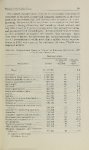
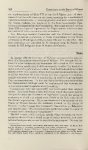
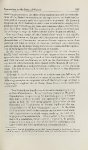
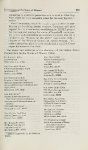
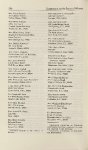
Show 262 Commissions on the Status of Women the implementation of Title VII of the Civil Rights Act. A state ment of the Council's views on the issues, stressing the importance of vigorous administration in securing greater social and economic gains for women workers, was approved by the Interdepartmental Com mittee and transmitted to the Commission. The paper pointed out that Title VII is of special importance for Negro women who have been the victims of bothrace and sex discrimination. The Interdepartmental Committee and the Citizens' Advisory Council sponsored conferences of State Commissions on the Status of Women in Washington, D.C., in June 1964 and in July 1965. The first conference was attended by 83 delegates from 31 States; the second, by 327 delegates from 49 States and Canada. State In August 1962 the Governor of Michigan announced the appoint ment of a Commission on the Status of Women. His example was fol lowed in other States until by September 1965 a total of 45 1 Commis sions had been established, 4 of those currently in effect 2 by legislation and the others by gubernatorial action. Over half had published either interim or full-term reports of their findings and recommendations, and in all but one State the Commissions had been requested to continue, usually with some revision of membership, in order to help implement their recommendations. In that one State the Governor decided that the Commission's findings could be implemented best through ad ministrative action by agencies already existing. Commissions were not necessarily continued under their original In several States a name was chosen which fitted more exactly names. the specific areas the Governor or legislature wanted the group to emphasize or which was related more closely to the basic structure of the State's organization. Thus one Governor's Commission on the Status of Women became the Advisory Council on the Status of Women; another became the Governor's Commission on Education and Employment. Several others were established under the name of "committee" rather than a "commission." The full impact of this work on specific State situations, by repre sentatives chosen from a broad range of social, economic, and occu a pational backgrounds, cannot be described in any report. Noway has Not included were Alaska, Connecticut, New Mexico, Ohio, and Texas. In Puerto Rico Columbia, Commissions were under consideration. 2 The original 4 included California, Illinois, Massachusetts, and MiSsissippi. Later 1 and the District of North Carolina changed fr@m a Governor's Commission to one established by the legisla ture, and Dlinois moved from a legislative commission to one appointed by the Governor. |